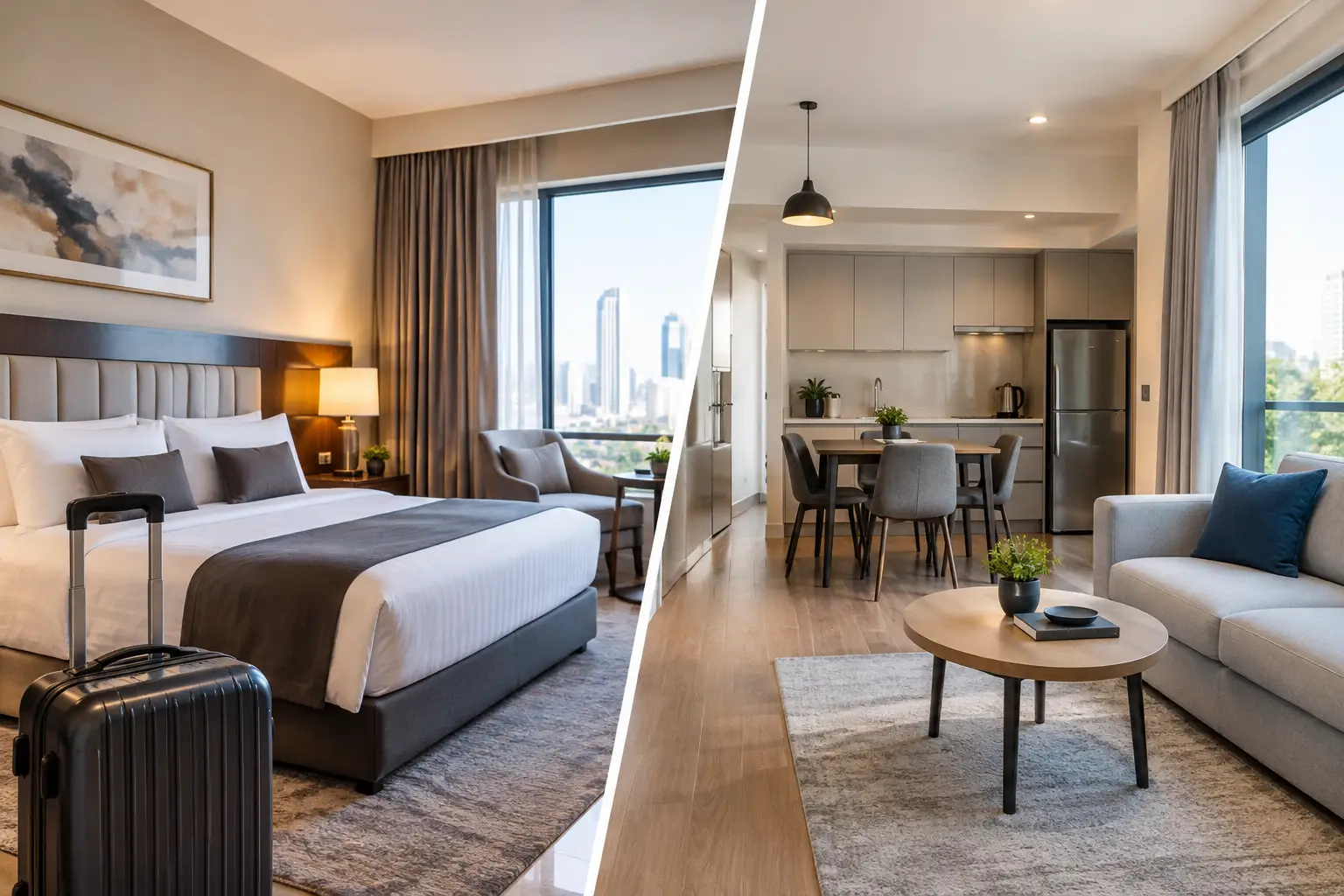
The difference between a relaxing trip and a stressful one often starts with what seems like a simple decision when booking: hotel or serviced apartment? After a long arrival in Istanbul, a family program in Antalya, or a business stay in a new city, you'll discover that the type of accommodation doesn't just determine where you sleep—it affects your budget, daily flexibility, family privacy, and ease of movement.
There is no one-size-fits-all answer. A hotel may be the smarter choice for a short trip where you want ready-made service and a central location, while an apartment offers more space and a home-like feel—especially when traveling with children or staying for several days. The right choice starts from your actual travel needs, not just the photos.
Hotel vs. Serviced Apartment: What's the real difference?
A hotel is accommodation based on a room or suite, typically offering reception services, regular cleaning, and possibly breakfast, restaurants, and facilities like a gym or pool. It suits travelers who want quick access, clear procedures, and available service when needed without managing their own stay details.
A serviced apartment is a residential unit within an accommodation-managed facility, usually featuring one or more separate bedrooms, a living area, and often a kitchen or small kitchenette, sometimes including a washing machine. Service varies by location: some offer 24-hour reception and cleaning, while others provide limited services compared to traditional hotels.
Therefore, do not assume that every serviced apartment offers both privacy and service, nor that every hotel means a small room. Some hotels offer spacious family suites, while some serviced apartments charge extra for cleaning or parking. Read the unit details and stay policies before confirming your booking.
When is the hotel the best choice?
A hotel serves travelers who prefer all basics ready from the moment of arrival. If your trip to Istanbul is two or three nights, for example, and your schedule is full of tours, sightseeing, and shopping, you won't spend much time inside the room. In this case, location value and service may be more important than having a full kitchen or large living space.
A hotel also suits couples, solo travelers, and short business trips. You can start your day with breakfast on-site, request assistance from reception, and return in the evening to a tidy room without thinking about buying supplies or preparing meals. Additionally, well-rated hotels typically offer clearer standards for check-in, luggage storage, room service, and late arrival arrangements.
Choose a hotel if these priorities matter most to you: location near attractions or business district, short stay, reliance on daily services, or desire for facilities like pools, spas, and restaurants. However, check room size carefully, especially if traveling with two children or carrying heavy luggage; an excellent location does not compensate for tightness that causes fatigue throughout your stay.
When do serviced apartments excel?
Serviced apartments show their advantage when you need space and flexibility—especially for families, small groups, and stays lasting a week or more. Having a separate bedroom and living area allows parents to rest after children sleep, instead of everyone staying in one space. In many cases, an apartment with two rooms is cheaper than booking two separate hotel rooms.
A kitchen or kitchenette is a practical feature, not just an extra detail. You can prepare a light breakfast before heading out, store water and snacks, and prepare meals suitable for children or special dietary needs. This doesn't mean you must cook daily on vacation, but it gives you a useful option when arriving late or wanting to reduce restaurant spending.
Serviced apartments also suit those combining work with travel, or planning a quiet program outside crowded areas. However, note that some units do not offer daily cleaning, and key handover or night access procedures may be less flexible than hotels. Be sure to confirm the presence of an elevator, air conditioning, and washing machine if needed, plus clear reception or documented check-in methods.
Calculate total cost, not just nightly rate
One of the most common mistakes is comparing a hotel room price with an apartment price without considering what each offers. A hotel including breakfast and daily cleaning may be good value for a couple on a short stay. For a family of four over a week, however, the cost of daily breakfasts and two separate rooms can become significant, while an apartment provides more space with the option to organize some meals.
Also consider taxes, service fees, final cleaning charges if applicable, parking, child cots, and cancellation policy. Don't rely on terms like "all-inclusive" without reading what it actually includes. Breakfast may be included, but airport transfers might not be, or laundry service could carry separate fees.
If your budget is limited, choose the suitable neighborhood first, then compare similar units based on space and services. The cheapest accommodation in a distant area might consume what you saved on taxis and time—especially if your program includes daily sightseeing visits.
Location matters more than establishment name sometimes
In a large city like Istanbul, the meaning of "good location" varies depending on travel goals. Someone wanting to explore Sultanahmet and the Old City needs easy access to historical sites, while a shopping and dining lover may prefer staying in Taksim or Nişantaşı near suitable transport hubs for their schedule. For families, a quiet street with proximity to shops and pharmacies might be more important than views alone.
When choosing a serviced apartment, check the actual distance to the nearest transport station and walking up or down slopes—not just the neighborhood name. When booking a hotel, verify if rooms overlooking main streets may be affected by noise. Photos highlight lobbies and views, but location maps, cleanliness ratings, and bed comfort reviews tell you much about your daily experience.
Questions to settle before payment
Before confirming any stay, check the maximum number of guests allowed in the unit—not every suite or apartment automatically accommodates a family as expected. Also verify bed types, especially if you need separate beds for children or extra beds for adults.
Ask about check-in and check-out times, night access possibilities, and luggage storage before or after the room. These details are crucial when international flights arrive early in the morning or depart late at night. You should also confirm cancellation policies and actual deduction dates from your card, as flexibility may justify a slightly higher price if travel plans can change.
For those preferring integrated arrangements, dealing with an official travel agency helps coordinate accommodation with airport reception or private tours, rather than distributing bookings among multiple parties. At Seen Travels, travelers can arrange booking and ground services with official confirmation and 24/7 support—reducing anxiety upon arriving at a new destination.
Choose based on your trip style, not general rules
If your short trip is focused on going out all day, a hotel often provides an easier and clearer experience. If you're traveling as a family, staying longer, or preferring living space with meal preparation options, a serviced apartment may be more comfortable and economical. For private trips, the best solution might be a hotel suite or serviced apartment combining space with reception services.
Don't make the choice between hotel and serviced apartment a test of status or luxury. Make it a decision serving your actual day: where you'll wake up, how you'll move around, who needs rest, and what should remain easy when exploration hours end. Then accommodation becomes a comfortable part of the trip—not an additional task requiring management.