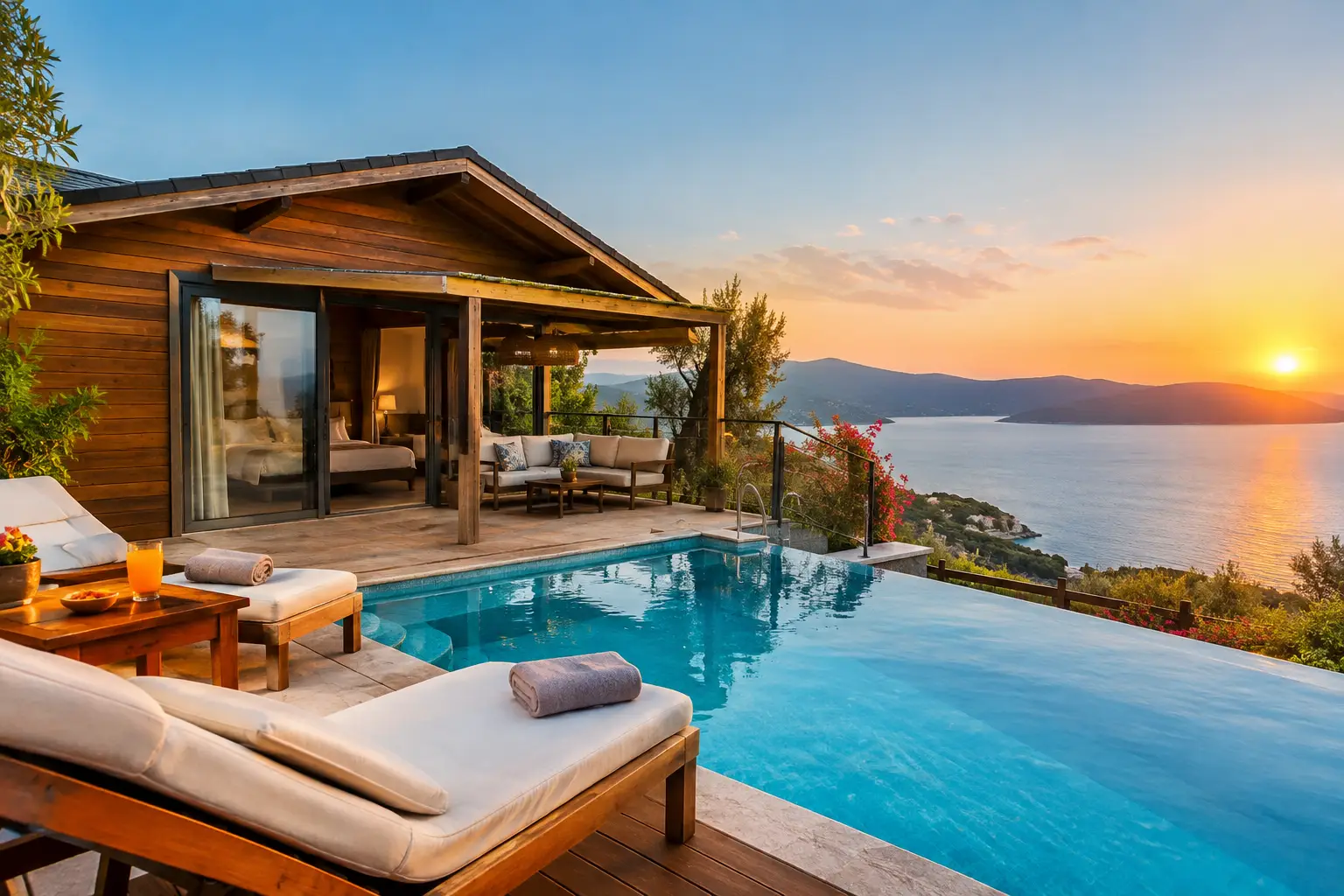
Turkish chalets may appear to be a simple accommodation option, but the difference between a relaxing holiday and a stressful experience can begin with small details: a remote location away from services, an unsuitable pool for children, mountain roads that don't fit your rental car, or photos that don't reflect the true level of privacy. For travelers from Saudi Arabia seeking independent space, close-to-nature experiences, and reliable services, choosing a chalet requires smarter planning than just comparing prices.
The right chalet gives you more freedom than a traditional hotel: family meals in private spaces, flexible schedules, natural views, and accommodation suited for families, small groups, and couples. However, it's not the best option in every city or season. The idea is to match the type of accommodation with your itinerary, rather than choosing the prettiest photo on the booking page.
Where can you find the best chalets in Turkey?
Chalets and private villas are scattered across Turkey between quiet coastal areas, green highlands, and cities close to Istanbul. The choice depends on whether your priority is the sea, pleasant weather, or proximity to attractions and daily services.
Trabzon and Oymapinar: For nature and highlands
Trabzon remains one of the most popular destinations for Gulf families, especially in summer. Chalets in the city's suburbs, Oymapinar, and nearby Rize highlands suit those seeking green atmospheres, mild weather, and privacy. Wooden cabins or independent houses with views of forests and rivers are often available.
However, distances here deserve attention. Some beautiful properties lie far from restaurants and markets, and may require a downhill road or driving in foggy areas. If you don't plan to rent a car, book private transfer or car-with-driver service in advance, and ensure daily trips to Oymapinar, Ayder, or central Trabzon are feasible without fatigue.
Antalya and Fethiye: For the sea and private villas
When your travel goal is relaxation near the coast, Antalya, Kaş, Fethiye, and Marmaris stand out. Here you will find villas and chalets with private or shared pools, suitable for longer stays in spring, summer, and early autumn. It's a good option for families who want to combine beach access, restaurants, and water activities.
The trade-off is that prices rise during peak seasons, especially in July and August. Also, the phrase "close to the sea" may mean driving distance rather than walking distance. Ask for the actual distance to the beach and the nearest supermarket, and check if the pool is heated when traveling in colder months.
Sakarya and Seben: For their proximity to Istanbul
If your itinerary starts in Istanbul and you want to spend two or three nights amidst nature, Seben and Masukiya offer a practical solution. Cabins and chalets with gardens and outdoor seating are widespread there, making them suitable for couples and small families. Their relative closeness to Istanbul makes them ideal for those who don't wish to add an internal trip.
However, the quality of units varies greatly in this region. Some chalets are designed more for quick photos than comfortable stays, and actual space may be limited. Read room and bathroom counts carefully, and don't assume that a jacuzzi or fireplace means the place is spacious or suitable for children.
What should you check before booking Turkish chalets?
Picking the number of rooms and price isn't enough. Review details that truly affect group comfort, especially when traveling with children or seniors. Clear descriptions and official confirmations matter more than general promises.
Privacy isn't a single description
A chalet may be independent in terms of the building, but the garden or pool might be shared with neighboring units. If privacy is a priority for your family, ask directly: Is the pool private? Can outdoor seating areas be seen from surrounding properties? Is there an independent gate? Does the owner live in the same building or nearby?
These questions are also important for travelers seeking peaceful atmospheres. In some complexes, villas may be close together and noise travels easily, especially during weekends and summer season.
Heating, air conditioning, and kitchen facilities
Turkey's weather is more variable than some visitors expect. In northern Turkey, evenings can be cold even in summer, while coastal cities need effective air conditioning at peak heat. Ensure suitable heating exists, especially in wooden chalets, and that bedrooms have AC—not just the living room.
As for the kitchen, don't assume it's fully equipped. You might find only a fridge and kettle, while families need a stove, cooking utensils, or dishwasher/washing machine during long stays. Determine what you'll actually use before booking, rather than paying more for a kitchen that doesn't meet your needs.
Actual capacity and sleeping arrangements
Distinguish between the number of guests allowed and comfortable beds. Sometimes convertible sofas count toward capacity but don't suit every family member. Review bed distribution, bathroom counts, and whether rooms are on an upper floor requiring stairs.
For large families, a villa with at least two bathrooms is much more comfortable than a visually spacious chalet containing only one bathroom. If you have an infant or someone with limited mobility, ask about entrances, stairs, and safety barriers around the pool.
Arrange arrival and transport before confirming accommodation
The most common problems don't relate to the chalet itself, but how to reach it. Late arrival at Trabzon or Dalaman airport followed by searching for a suitable car or unclear address can consume the start of your holiday. Therefore, coordinate airport transfers before traveling, sharing luggage count, number of children, and arrival time accurately.
In mountainous areas, a suitable 4x4 vehicle may be useful, but a local driver remains a comfortable option for those who don't want to drive on winding roads or handle parking at tourist sites. It also allows you to plan trip stops realistically instead of trying to visit several distant regions in one day.
When booking accommodation and transport through an organized agency, request official confirmation including the property name, check-in and check-out dates, address or meeting point, cancellation policy, and contact method upon arrival. Seen Travels provides accommodation and transfer arrangements plus special tours within Turkey via a multilingual team, helping travelers avoid distributing details among different providers.
When is a hotel a better option?
A chalet isn't necessarily the best choice for a short visit to Istanbul. If your trip focuses on Sultan Ahmed, Bosphorus, shopping, and museums, a central hotel can save significant travel time and place you near restaurants and services. It may also suit those who prefer daily breakfasts, 24-hour reception, and direct service without the responsibility of meal preparation.
In contrast, a chalet excels when spending several nights in one destination, traveling with a family needing space and separate rooms, or seeking privacy away from city crowds. You can also combine both: stay at a hotel in Istanbul at the start of your trip, then move to a chalet in Seben, Trabzon, or the coast afterward.
Booking timing affects price and selection
For summer, especially school holidays and Eid al-Adha, it's best to book popular chalets well in advance. Units with private pools or direct views are booked first, and remaining options often become further away or more expensive. Spring and autumn offer you greater flexibility and more balanced prices along the coast and highlands.
Don't let low price alone be the reason for booking. Compare final prices after accounting for cleaning fees, insurance if applicable, transfers, and additional service charges. The cheapest chalet can become more costly if it's very far from activities or requires long daily commutes.
A comfortable holiday starts with accommodation that fits your pace, not just an attractive list of features. Choose a location that minimizes travel, confirm privacy details and facilities in writing, and leave room in your schedule to enjoy the place itself. Then the chalet becomes part of the journey, not merely a room where you sleep.