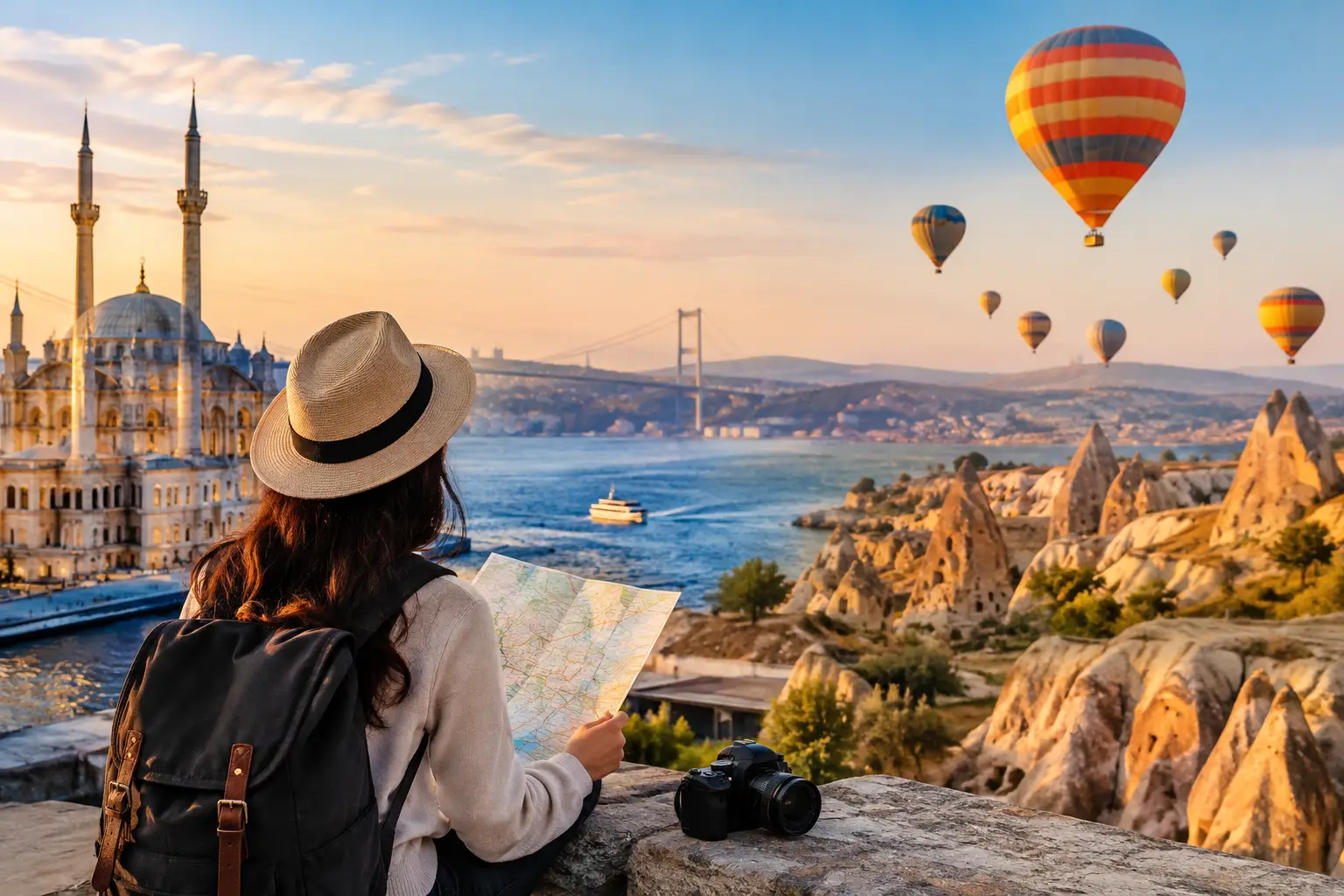
Between the bustle of the Bosphorus at sunset and the hot air balloons of Cappadocia at dawn, Turkey tours are not successful with separate bookings alone. What truly makes a difference is organizing your timing, transfers, and hotel location from the start, so that you arrive at every stop knowing who will greet you, where you will stay, and how you will travel the next day.
Turkey is a suitable destination for those seeking a vibrant city holiday, quiet nature, warm beaches, or a mix of all. However, it is vast and diverse, so a short program in Istanbul requires completely different planning from a trip extending to Cappadocia, Antalya, or Trabzon. The right choice does not depend only on the most famous cities, but also on the number of nights, the travel season, and the pace of holiday you prefer.
How do you choose a Turkey tour route?
Start with a simple question: Do you want a city and culture trip, nature and relaxation, or a program that combines both? If this is your first visit and your time is between 4 to 6 nights, Istanbul deserves the largest share of the itinerary. The city cannot be seen quickly, especially when adding the Bosphorus tour, the Old City, markets, and neighborhoods on the Asian side.
When you have 7 to 9 nights available, combining Istanbul and Cappadocia becomes a balanced option. Istanbul offers historical experiences, restaurants, and shopping, while Cappadocia provides valleys, cave hotels, and serene morning views. If the priority is the sea, Antalya, Bodrum, and Fethiye are best suited for warm months, keeping in mind that long overland travel may consume a significant part of your holiday time.
Trabzon and the Black Sea region suit those seeking green nature, highlands, and pleasant summer weather. Do not add them to an Istanbul-Cappadocia program just because they look beautiful in photos. Distances and internal journeys require time, and it may be better to book a separate trip for them or extend the program sufficiently.
How many nights do you need at each destination?
Istanbul usually requires 4 nights as a practical comfortable limit. One day for the Old City, one day for the Bosphorus and city hills, one day for markets and modern neighborhoods, and one flexible day for cafes or shopping or visiting Fatih. Staying for only two nights is possible, but it makes the program rushed and may leave you with more options than time allows.
Cappadocia needs at least two nights, and three nights are better for those who want a relaxed experience including a hot air balloon ride when weather conditions permit, valley tours, and visits to underground cities. Treat the balloon as an important option rather than a guaranteed appointment, because safety and weather determine operations. Therefore, book it for your first full morning in the area so you have a backup chance if it is cancelled.
In Antalya, three or four nights are suitable for combining relaxation with one daily trip, such as waterfalls, the old town, or a boat tour. Beach resort lovers benefit more from 5 nights, especially during summer when the goal of the trip is to enjoy the hotel and sea rather than continuous daily travel.
Travel timing changes experience and cost
Spring and autumn are usually the best two times to visit Istanbul and Cappadocia. The weather is relatively moderate, walking is easier, and the experience is less exhausting than hot summer days or very cold ones. Conversely, prices and occupancy rise during holiday periods and crowded seasons, so early booking helps if your dates are fixed.
Summer is ideal for the Turkish coast, but it requires careful hotel selection and starting external tours early. During July and August, coastal cities may be crowded, while Cappadocia remains suitable in the morning and evening with higher heat during midday. Winter gives Istanbul a different character and prices might be better on some dates, but it is not the best time for those who put beaches or balloons at the core of their plan.
Do not rely solely on general expectations. Check weather conditions a few days before traveling, and plan with light layer clothing even in moderate seasons, as temperatures may change between morning and evening, especially in Cappadocia and highlands.
The hotel is not a secondary detail
The hotel location determines how much time you lose in cars or transport. In Istanbul, the Sultanahmet area suits first-time visitors wanting proximity to historical landmarks, while Taksim and Beşiktaş suit those who prefer restaurants, evening activity, and easy access to multiple areas. Nişantaşı or Beyoğlu suit those seeking upscale accommodation and a more local, quieter atmosphere.
A high star rating is not enough. Check its actual distance from transport hubs or landmarks you will visit, the nature of the neighborhood at night, and room size if traveling with children or many bags. Families often need connecting rooms or suites, while couples may prefer a small hotel with personal service and a distinctive view.
When booking hotels, free cancellation options give flexibility if flight plans or visas are not yet confirmed. However, read the cancellation date and refund conditions carefully, as "free cancellation" does not necessarily mean you can cancel at any time.
Makes transfers part of the plan
After a long flight, the last thing a traveler needs is negotiating transport or trying to understand addresses under arrival pressure. Private airport reception gives you an organized starting point, especially for families and small groups or those arriving late.
In Istanbul, transfer duration varies by airport, hotel location, and traffic conditions. Leave a realistic margin in your schedule and do not book dinner or important tours shortly after landing. If your program includes another city, coordinate departure time from the hotel with internal travel, luggage pickup, and transfer to the new destination.
Private car with driver is useful when you want to visit more than one site in a day or travel with elderly people and children. But it is not necessary in all cases. In central Istanbul areas, walking and public transport may be faster during rush hours. The best decision depends on hotel location, number of people, nature of the day, not on the idea that a car is always the most comfortable option.
What must be confirmed before payment?
For an organized trip without surprises, gather these details in one clear confirmation before your travel date:
- Hotel names, room types, check-in and check-out dates, and cancellation policy.
- Flight times, included luggage, and passenger names as they appear on passports.
- Airport reception details, including meeting point, contact number, and car capacity.
- Tour schedules, what is included in the price, available language, and approximate return time.
Official documents are not a formal procedure. A clear booking confirmation saves much confusion upon arrival, especially if the program includes multiple cities or multiple service providers. Also, having quick human support remains important when flight times change, luggage is delayed, or a traveler needs to modify a service while in Turkey.
A program can be arranged through a licensed local agent who combines hotel, flights, transport, and tours into one plan. Seen Travels offers this type of organization from Istanbul, with official confirmations, transfer services, special programs, and continuous support, which is a practical option for those who do not wish to manage every detail with multiple agencies.
A realistic program is better than a crowded schedule
The biggest temptation in Turkey tours is trying to visit everything. But a successful program leaves room for the road, weather, fatigue, and discovering a place you like best and want to stay longer. Give each day one main goal or two close goals instead of spreading landmarks across city outskirts during limited hours.
In Istanbul, for example, group Hagia Sophia, the Blue Mosque, and Topkapi Palace in one day because they are located in the same area, then dedicate another day to the Bosphorus, Beşiktaş, and Ortaköy. In Cappadocia, schedule the balloon ride in the morning, then plan a flexible activity afterward instead of committing to something that cannot be easily changed.
Comfortable travel does not mean an empty program, but one that knows what cannot be missed and what can be postponed. When your bookings are clear, transfers confirmed, and time distributed rationally, Turkey becomes closer to the experience you traveled for: cities with memory, nature with rhythm, and enough space to enjoy it all without rushing.