📍Destinations — Bursa
Pick a destination for full details
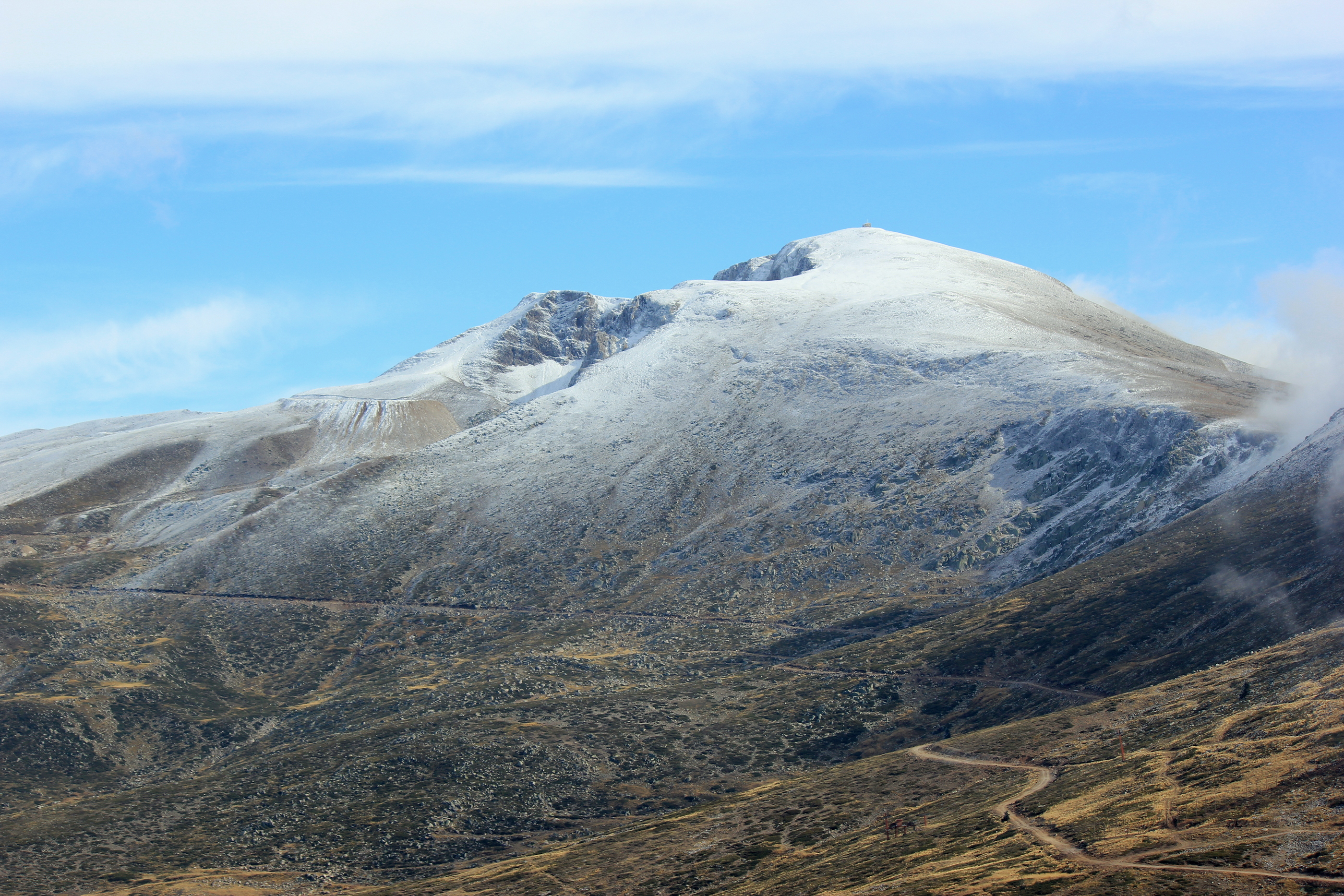
Uludag
Mountain & skiUludag, the ancient Mysian Olympus, rises to 2,543 metres directly above Bursa and is the most established ski resort in Turkey. The classic way up is the Bursa Teleferik, one of the longest cable-car lines in the world, which climbs from the Teferruc station in the city to Sarialan on the mountain, swapping city streets for pine forest and, in winter, deep snow. The upper hotels zone (Oteller Bolgesi) sits right on the pistes, with runs suited to beginners and intermediates and equipment for hire on site. The season usually runs from around December to March. In summer the mountain flips its purpose entirely: it becomes a cool green escape from the coastal heat, with marked trails through the national park, alpine meadows, glacial lakes near the summit and families spreading out picnics under the firs. Bring warm layers year-round, because even July mornings up top are brisk.
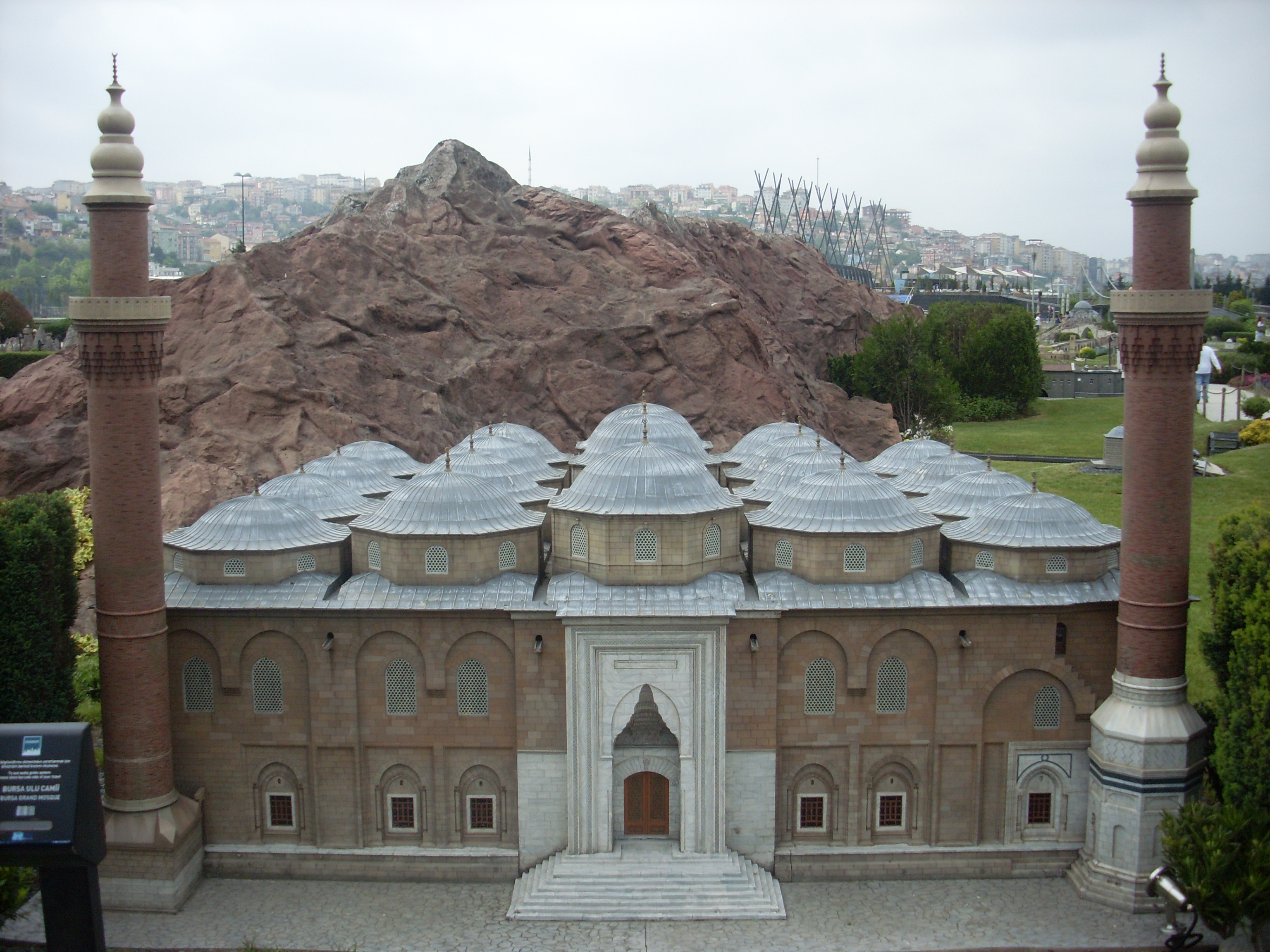
Grand Mosque (Ulu Cami)
Religious siteThe Ulu Cami, or Grand Mosque, is the masterpiece of early Ottoman architecture in Bursa, completed around 1399 for Sultan Bayezid I, who is said to have vowed to build twenty mosques after his victory at Nicopolis and settled instead on one mosque with twenty domes. Those domes, arranged in four rows of five and carried on twelve great piers, give the interior a vast, calm, cathedral-like space. Its most unusual feature sits right in the middle of the prayer hall: a working ablution fountain (sadirvan) beneath an open skylight, so daylight and the sound of water fall through the heart of the building. The walls and piers carry a celebrated collection of monumental Ottoman calligraphy, nearly 200 panels by master calligraphers, making the mosque a living gallery of Islamic script. It remains an active place of worship in the busy commercial centre, steps from the silk market.
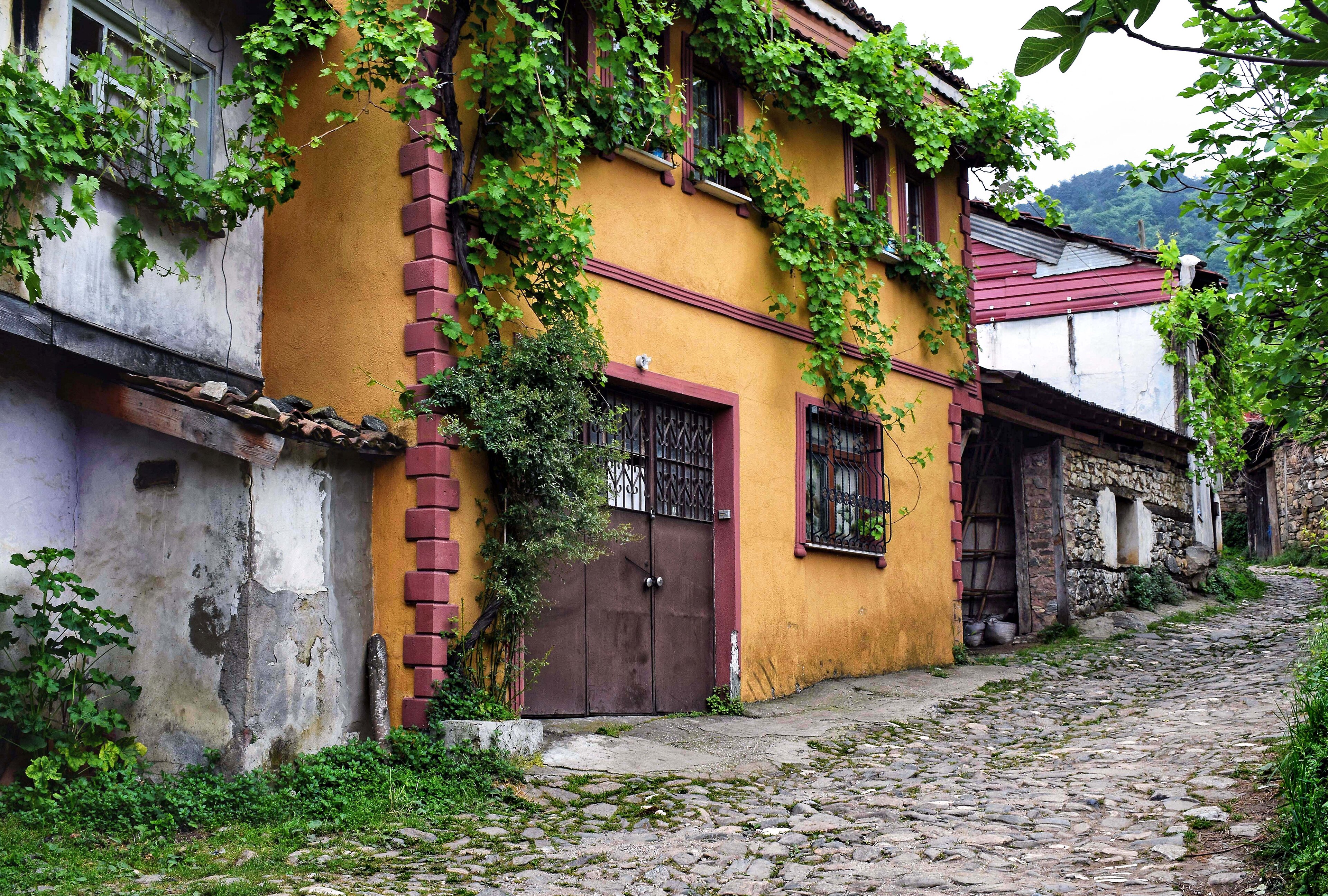
Cumalikizik
Historic villageCumalikizik is a living Ottoman village on the lower slopes of Uludag, roughly ten kilometres east of central Bursa, and one of the founding settlements of the early Ottoman world some seven centuries ago. Its steep cobbled lanes are lined with tall timber-and-adobe houses painted in faded blues, ochres and greens, many still lived in, their upper storeys leaning out over the street. The village is part of Bursa's UNESCO World Heritage listing precisely because it preserves this early Ottoman rural fabric so completely. Today its main draw is the legendary Turkish village breakfast: courtyard tables loaded with local cheeses, village bread, honey, homemade jams and eggs cooked in copper pans, often finished with the raspberries the village is known for growing. Wandering the lanes, browsing handmade goods and gozleme stalls, and lingering over that long breakfast is the whole experience. Come early, before the tour groups and the midday crowds arrive.
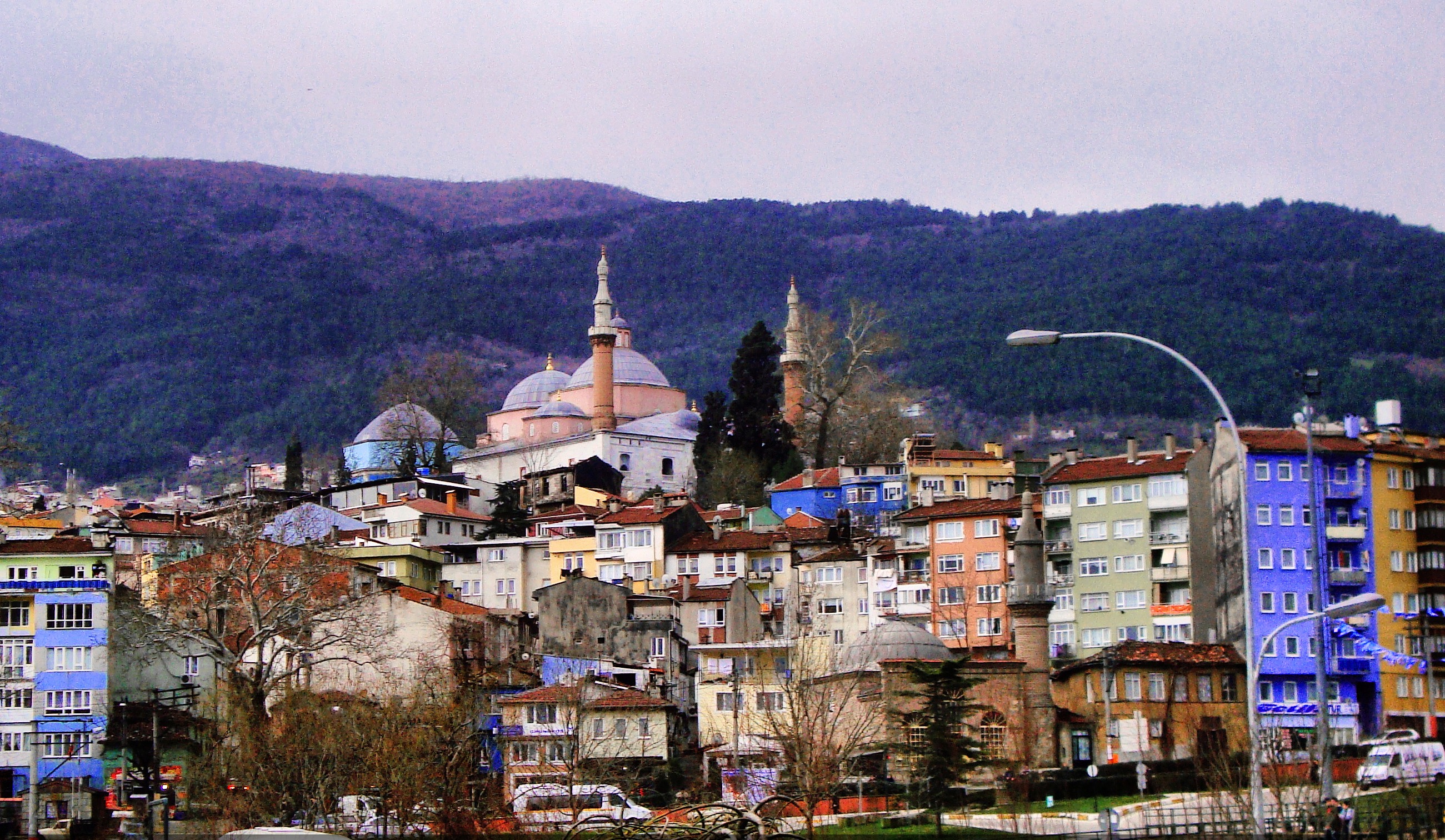
Green Mosque and Green Tomb
Religious siteThe Green Mosque and the Green Tomb crown a hillside in Bursa's Yesil district and mark the high point of early Ottoman decorative art. Both were built for Sultan Mehmed I, who reunited the empire after its civil war; the mosque was finished around 1421 and the tomb holds his remains. They take their name from the shimmering blue-green tiles that cover them, made in the demanding cuerda seca technique by master craftsmen brought from Tabriz. Inside the mosque, the mihrab, the sultan's private loge and the tiled panels are astonishing in their depth of colour and gilding, widely considered among the finest Ottoman interiors anywhere. Across the garden, the octagonal tomb glows with turquoise tilework and shelters Mehmed's carved sarcophagus beneath a domed ceiling. The pairing is compact and easy to see together, and the terrace outside offers a fine view back over the rooftops of the city toward the Marmara plain.
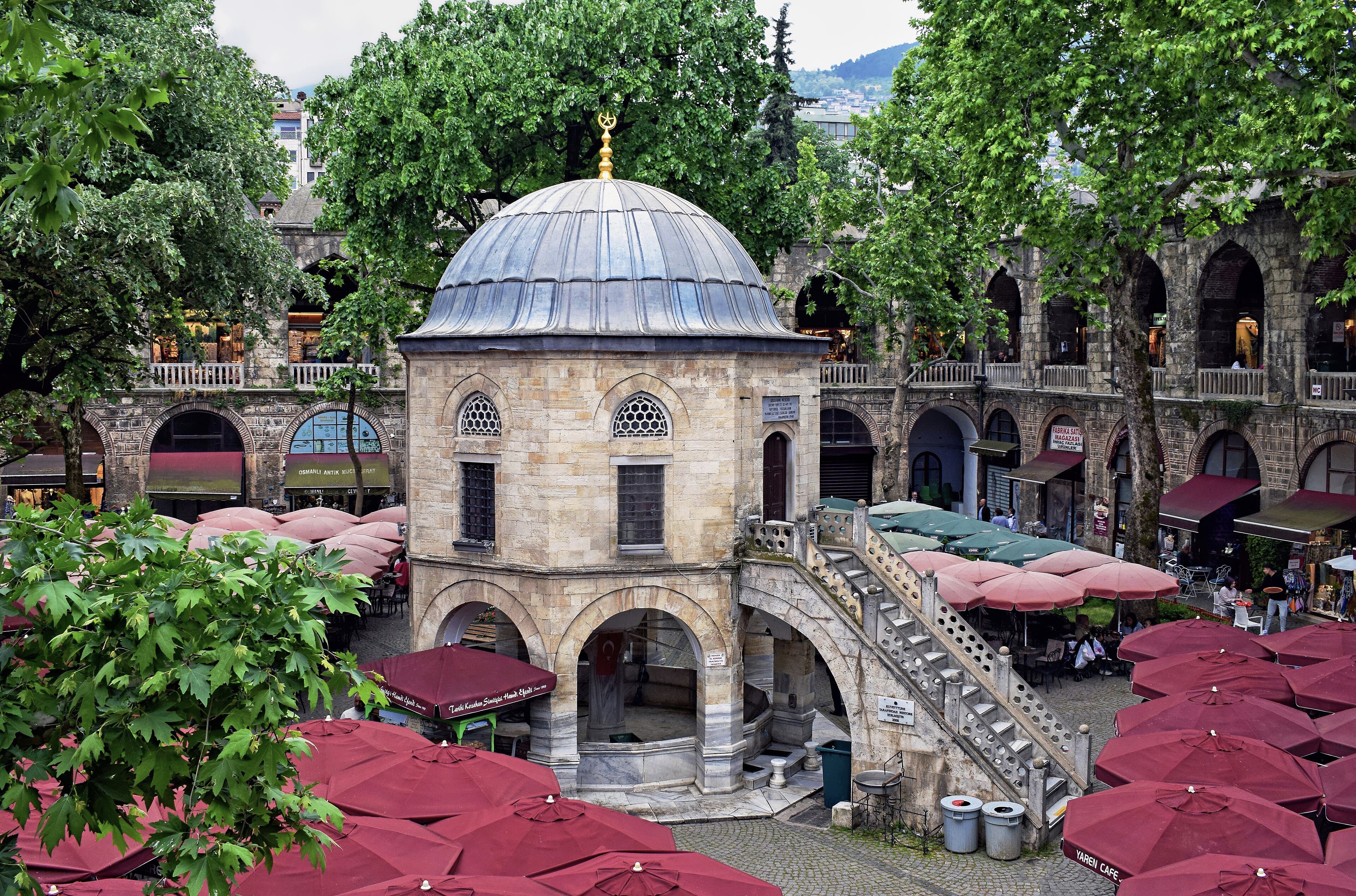
Koza Han
Historic marketKoza Han is the most atmospheric of Bursa's Ottoman market halls, a silk-traders' caravanserai commissioned by Sultan Bayezid II and completed in 1491. Its name means cocoon hall, because for centuries this was where silkworm cocoons were brought in from the surrounding villages and auctioned each spring, feeding Bursa's famous silk industry along the old road from the East. The two-storey arcaded courtyard still hums with commerce: dozens of shops sell silk scarves, shawls, fabrics and textiles, and traders in the galleries above once lodged where merchants now keep stock. In the centre of the courtyard stands a delicate little octagonal prayer room raised on pillars over a fountain, shaded by mature trees, with tea tables spread beneath it. Even if you buy nothing, it is one of the loveliest places in the city simply to sit with a glass of tea and watch the market go about its day. It connects directly to the surrounding covered bazaar.
🎯Things to do & experiences — Bursa
🎈Ride the Bursa Teleferik cable car up Mount Uludag for the views and cool air
🎈Ski or snowboard at Uludag between December and March
🎈Soak in a centuries-old thermal bath in the Cekirge spa quarter, fed by natural hot springs
🎈Try Iskender kebab in the city that invented it, sliced doner over bread with tomato sauce and melted butter
🎈Sit down to a long village breakfast in Cumalikizik
🎈Shop for silk scarves and textiles in Koza Han and the covered bazaar
🎈Catch a traditional Karagoz shadow-puppet performance, an art form rooted in Bursa
🍴Where & what to eat — Bursa
Bursa is a serious food city, and it starts with the Iskender kebab, invented here in the nineteenth century: thin slices of doner laid over cubes of pide bread, drenched in tomato sauce and sizzling browned butter, served with yoghurt. Beyond it, the city is famous for candied chestnuts (kestane sekeri), grown on the slopes of Uludag, and for hearty local specialities you rarely see elsewhere. Meals here lean rich, meaty and unhurried.
🍽️Iskender kebab, the city's signature dish, at one of the long-established houses that claim the original recipe
🍽️Kestane sekeri, glazed candied chestnuts from Uludag, sold in confectioners across the city
🍽️Pideli kofte, grilled meatballs served over bread with sauce and yoghurt, a Bursa comfort dish
🍽️Cantik, a small local flatbread topped with minced meat, eaten as a quick snack
🍽️A full village breakfast in Cumalikizik, with local cheeses, honey and homemade jams
🍽️Kemalpasa dessert, small syrup-soaked cheese pastries originally from the Mustafakemalpasa district of Bursa province
Plan your trip with Seen