📍Destinations — Ayutthaya
Pick a destination for full details
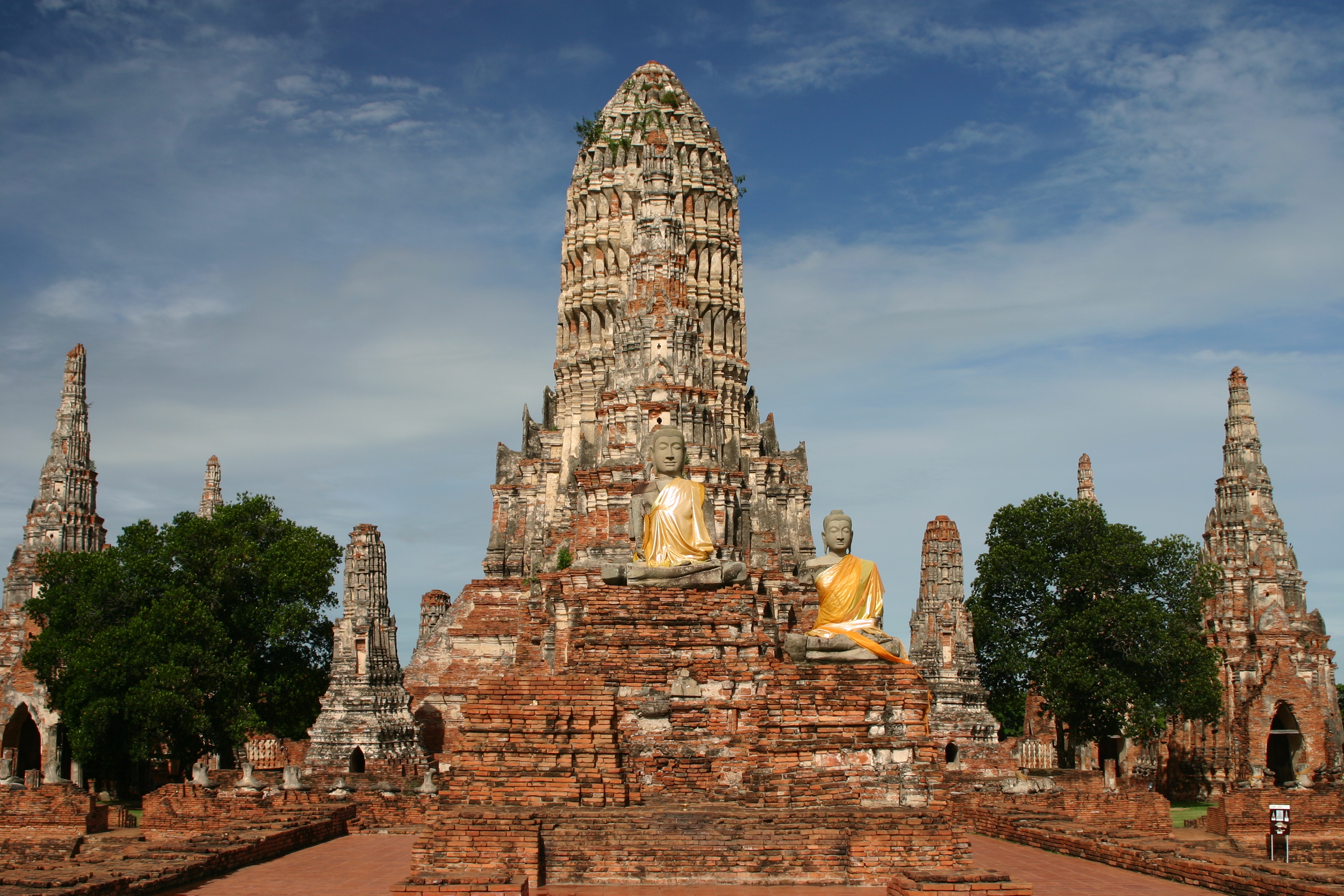
Ayutthaya Historical Park
HeritageThe Ayutthaya Historical Park is the collective heart of the old capital, a UNESCO World Heritage Site covering the ruins of dozens of temples, palaces and monasteries across the river-ringed island and its fringes. What survives are the brick-and-laterite cores of the once-gilded monuments: bell-shaped Ceylonese chedis, tall corn-cob-shaped Khmer-style prangs, roofless prayer halls and long lines of Buddha images, many left headless after the city was sacked in 1767. The scale is genuinely impressive, and the flat, compact layout makes it ideal to explore by rented bicycle or by chartered tuk-tuk, moving between the major temple clusters at your own pace. Several of the most important ruins sit close together in the central zone and can be combined in a single morning. Because the sites are exposed brick with little shade, the cooler, drier months and the early or late hours of the day are far more comfortable. Modest dress is expected, as these remain sacred places.
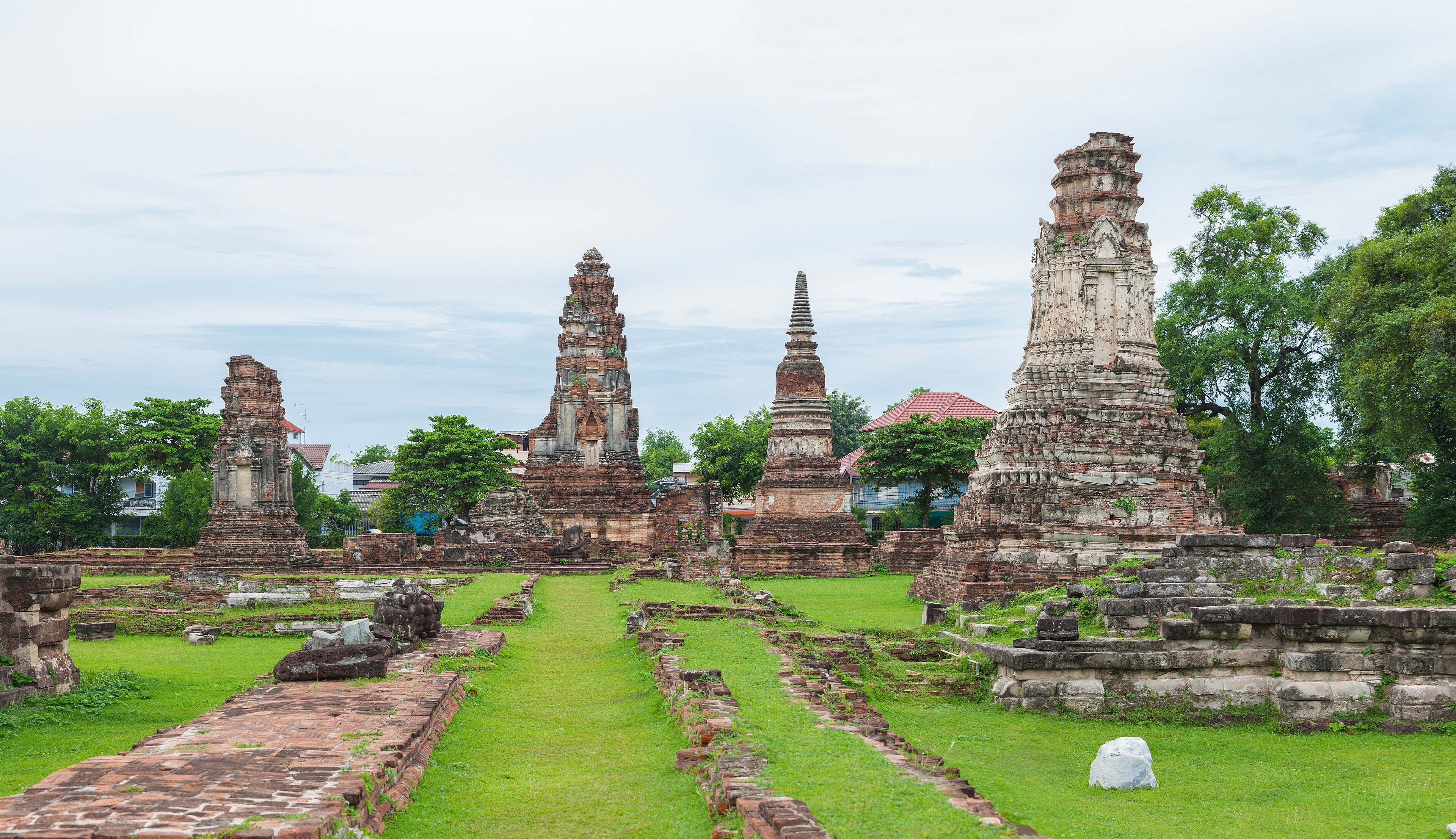
Wat Mahathat
HeritageWat Mahathat is among Ayutthaya's oldest and most significant temple ruins, founded in the fourteenth century as the seat of the kingdom's supreme Buddhist patriarch and once crowned by a towering central prang that has since collapsed. Its worldwide fame, though, rests on a single quiet image: the weathered stone head of a Buddha cradled in the gnarled roots of a bodhi tree, which over the centuries have grown to embrace it. Nobody recorded exactly how the head came to rest there after the city fell, which only adds to its mystery, and it has become one of Thailand's most photographed heritage sights. Around it stretch the atmospheric remains of the monastery: the stump of the great prang, brick chedis, and rows of seated Buddha figures whose heads were lost to looting and war. It is treated with deep reverence, so when photographing the tree-bound head visitors are asked to crouch, keeping their own head no higher than the Buddha's.
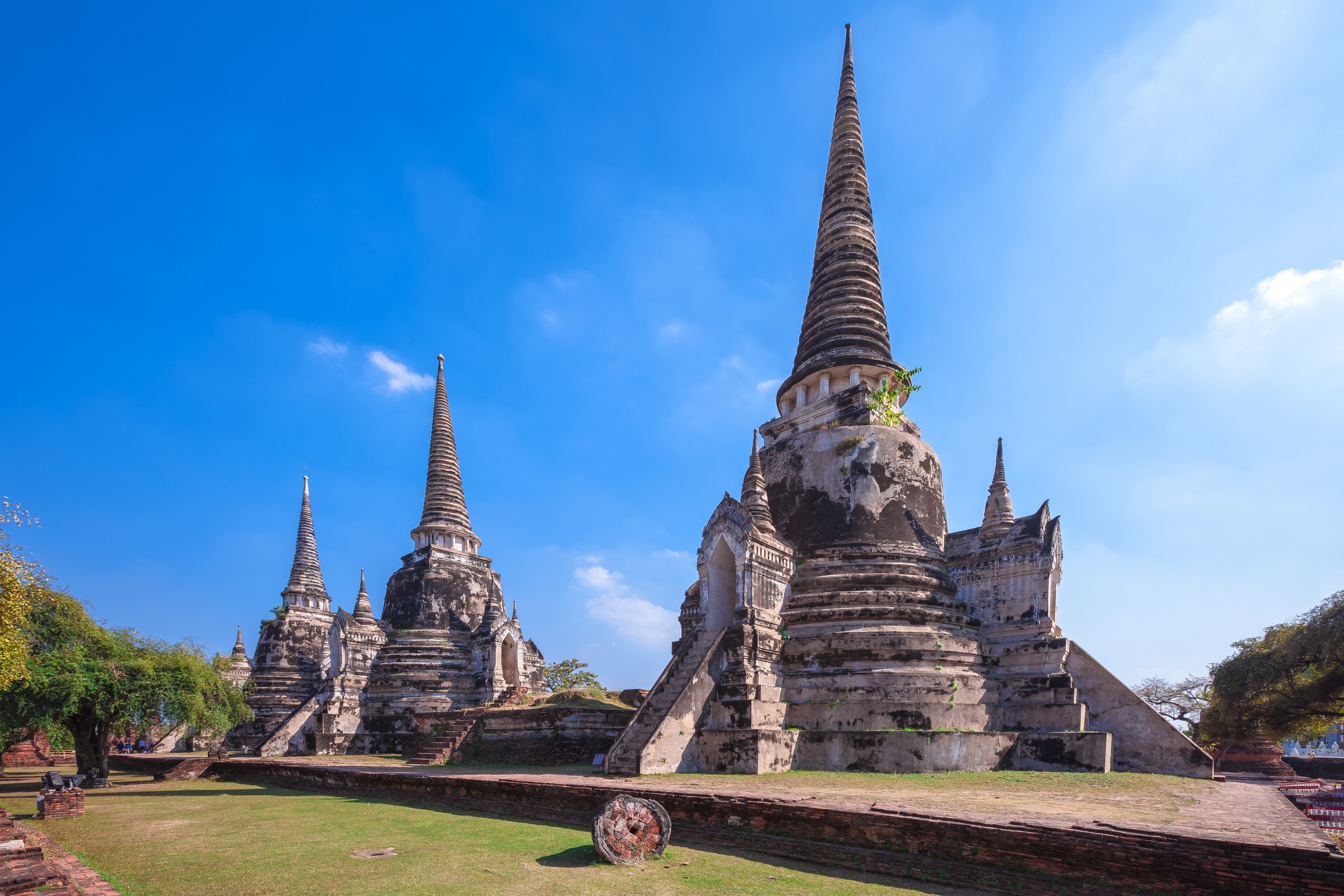
Wat Phra Si Sanphet
HeritageWat Phra Si Sanphet was the grandest and holiest temple of Ayutthaya, built within the grounds of the royal palace to serve as the kings' private chapel, so no monks ever lived there. Its defining feature, and the single most iconic image of the whole city, is a row of three restored bell-shaped chedis standing in a stately line, each raised in the fifteenth and early sixteenth centuries to enshrine the ashes of three Ayutthaya kings. The temple once held a sixteen-metre standing Buddha covered in gold, later stripped and melted down when the Burmese sacked the capital, and the surviving brick platforms and column stumps around the chedis hint at how vast the complex once was. Set beside the old palace ruins, it is one of the most photogenic spots in Ayutthaya, particularly in the golden light of late afternoon. It sits within easy reach of the other central monuments and is an essential stop on any visit.
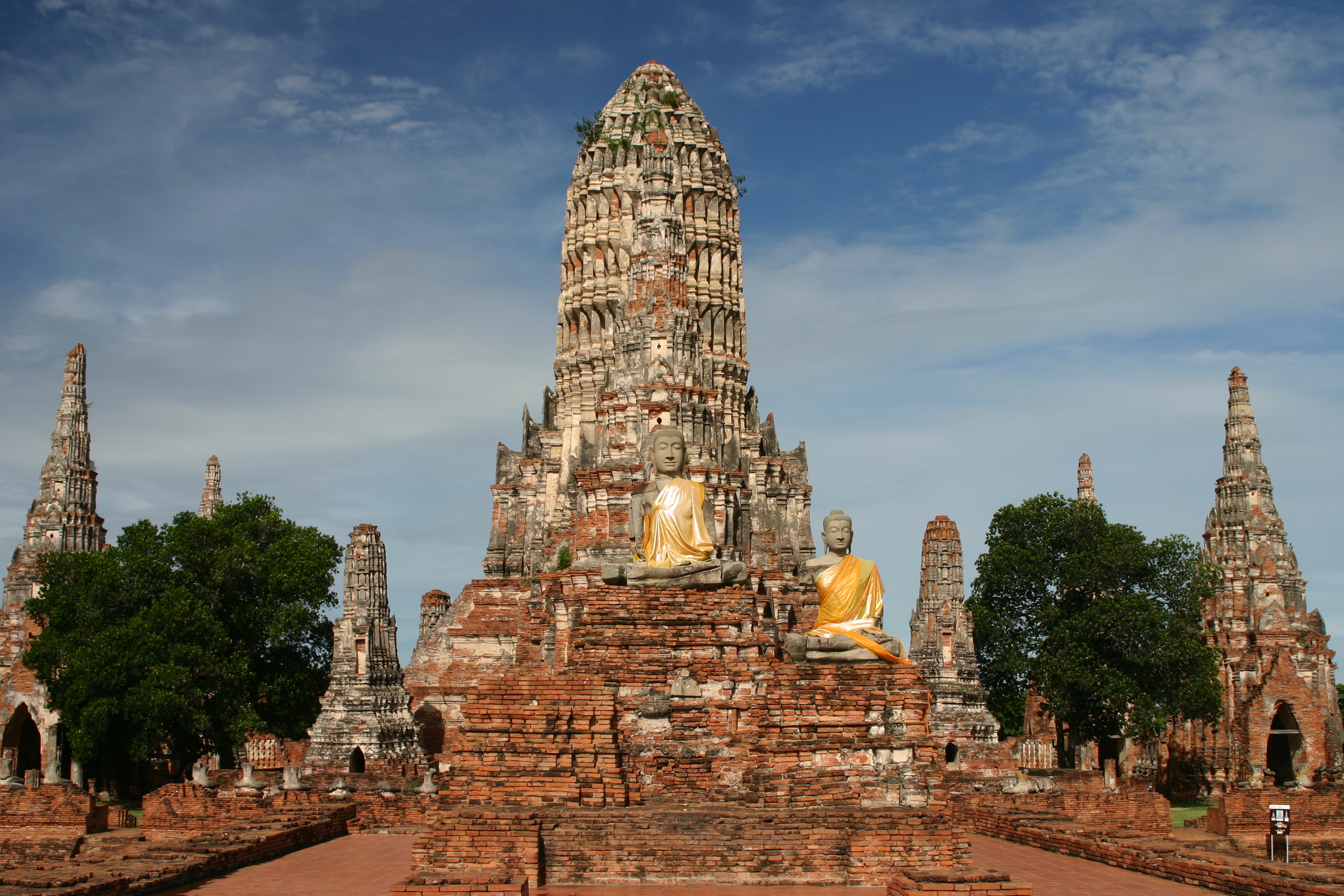
Wat Chaiwatthanaram
HeritageWat Chaiwatthanaram is the most striking of Ayutthaya's riverside ruins, built in 1630 by King Prasat Thong on the west bank of the Chao Phraya, just outside the island. Its design is deliberately Khmer in inspiration, echoing the temple-mountains of Angkor: a tall central prang symbolising Mount Meru, the mythical centre of the universe, surrounded by four smaller prangs and a ring of chedi-topped chapels that once sheltered rows of Buddha images. The riverside setting and the symmetry of the towers make it perhaps the most photogenic temple in Ayutthaya, and it is especially beautiful at sunset, when the brick glows warm and the prangs reflect in the water. It is also a popular place to see visitors in rented traditional Thai dress posing among the ruins. Because it stands across the river from the main island cluster, it is usually reached by a short drive or as a stop on a river boat tour, and it rewards a slower, unhurried visit.
Bang Pa-In Royal Palace
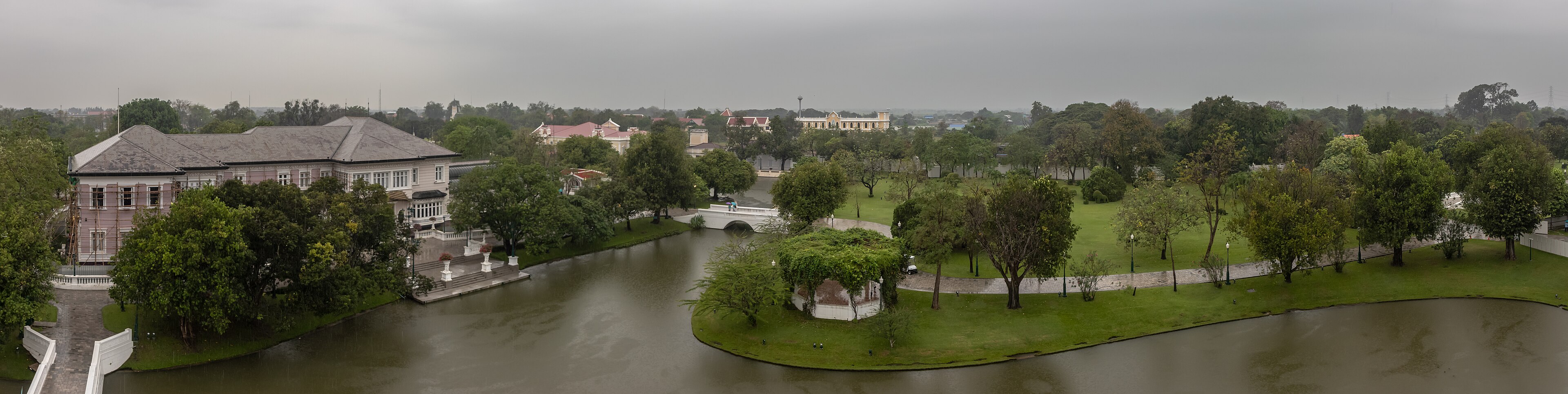
PalaceAbout twenty kilometres south of the ruins, the Bang Pa-In Royal Palace, often called the Summer Palace, offers a complete change of mood from the weathered temples. Originally founded in the seventeenth century by an Ayutthaya king, it was largely abandoned after the capital fell and then lavishly rebuilt in the nineteenth and early twentieth centuries by King Chulalongkorn, Rama V, as a royal summer retreat. The result is a serene lakeside garden estate of manicured lawns, ponds, topiary and an eclectic mix of architectural styles that reflect the king's interest in the wider world. Its best-loved feature is the delicate Thai-style pavilion, Aisawan Thiphya-Art, that appears to float in the middle of an ornamental pond, one of the most graceful buildings in the country. Elsewhere stand a Chinese-style palace of imported craftsmanship, Italianate mansions and an observatory tower. As a royal site it enforces a strict dress code covering shoulders and knees. Electric carts help visitors cover the grounds.
River boat tour around the island
SightseeingAyutthaya sits on an artificial island at the meeting of the Chao Phraya, Lopburi and Pa Sak rivers, and taking to the water is one of the most relaxed and atmospheric ways to see it. A typical longtail-boat tour loops the island in one to two hours, usually in the late afternoon, gliding past a string of riverside monuments that are hard to reach or best seen from the water. Most circuits pause at or slow before three temples: Wat Phutthaisawan, with its handsome Khmer-style prang; the majestic riverside ruins of Wat Chaiwatthanaram, glowing at sunset; and Wat Phanan Choeng, home to a revered nineteen-metre seated Buddha and a lively working shrine. Drifting past fishermen, riverside homes and the occasional monastery gives a gentler, cooler perspective on the old capital after a hot day among the ruins. Boats can be chartered privately from several piers, and some Bangkok operators run full dinner cruises up to Ayutthaya and back.
🎯Things to do & experiences — Ayutthaya
🎈Cycle the historical park between its major temple ruins in the cool of the morning
🎈Charter a tuk-tuk driver for a half-day tour of the main monuments
🎈Late-afternoon longtail boat loop around the island past the riverside temples
🎈Day trip from Bangkok by train, minivan or private car, about ninety minutes each way
🎈See the giant outdoor reclining Buddha of Wat Lokayasutharam and the restored bronze Buddha of Wihan Phra Mongkhon Bophit
🎈Trace the city's trading history at the Ayutthaya Historical Study Centre and the Chao Sam Phraya National Museum
🎈Combine the ruins with the royal Summer Palace at Bang Pa-In on the way to or from Bangkok
🍴Where & what to eat — Ayutthaya
Ayutthaya's food leans on its rivers and its history as a trading crossroads, and the city has a couple of famous local specialities worth seeking out between temple visits.
🍽️Boat noodles (kuaitiao ruea), the intense, dark river-noodle soup for which the region is known
🍽️Giant river prawns (kung mae nam), grilled whole and served at riverside restaurants
🍽️Roti sai mai, Ayutthaya's signature sweet of candy-floss threads wrapped in a thin pancake
🍽️Riverside restaurants and floating eateries with views over the water
🍽️The lively Ayutthaya night market and floating markets for cheap local street food
Plan your trip with Seen