📍Destinations — Chiang Mai
Pick a destination for full details
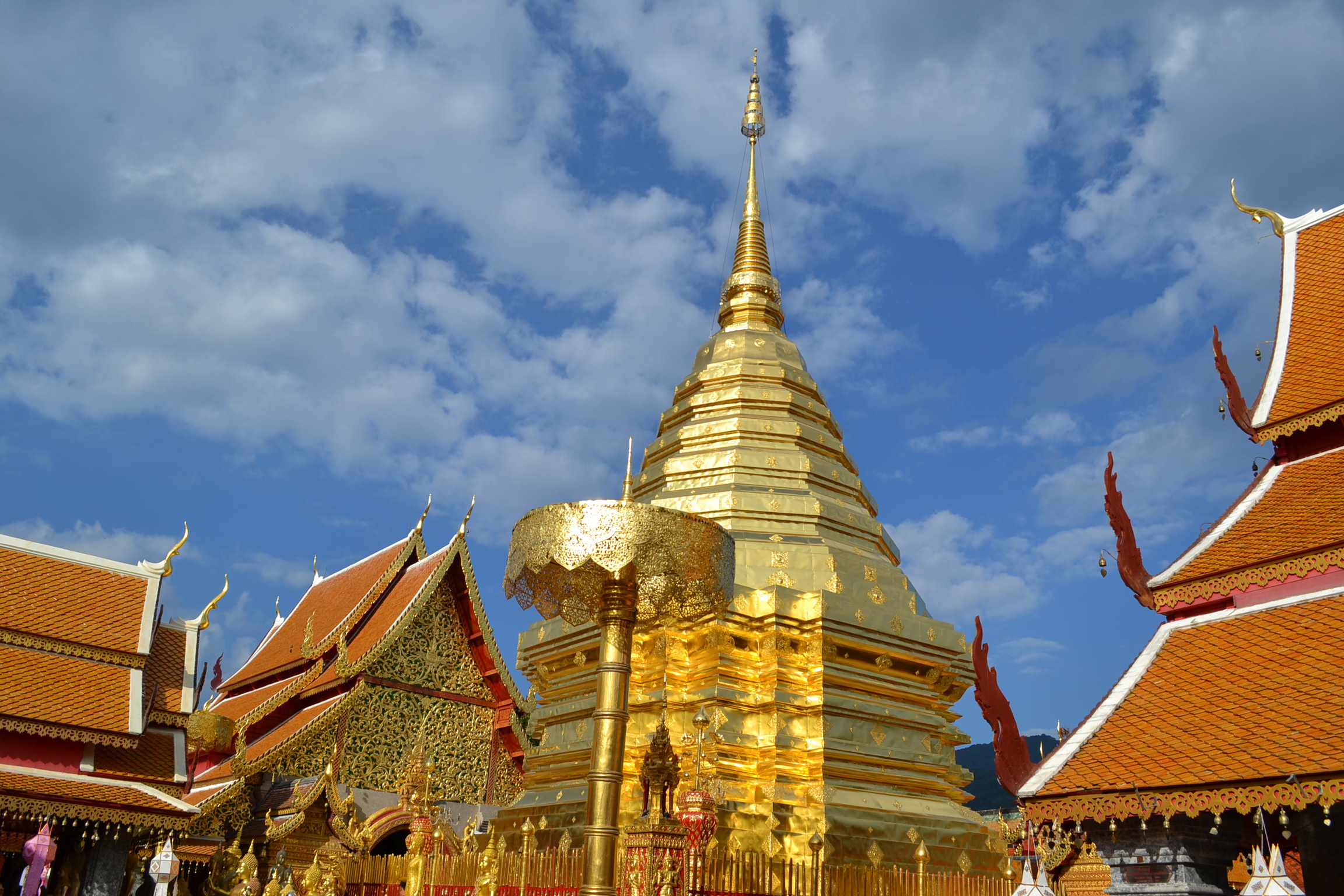
Wat Phra That Doi Suthep
Temple & HeritageThe north's most sacred temple sits high on Doi Suthep mountain about 15km from the city, its golden chedi founded in 1383 and, by legend, sited where a white elephant carrying a Buddha relic stopped and died. The classic approach is up a long naga staircase of around 300 steps, its banisters formed by scaly serpent-dragons, though a small tram spares those who would rather not climb. At the top, the gleaming central chedi is ringed by shrines, bells, and viewpoints that, on a clear morning, open right across the Chiang Mai valley. Go early: by midday cloud, haze, and tour groups all build up, and the light for both photos and views is best soon after opening. Modest dress is required as at any temple. A red songthaew (shared truck) from the old town is the usual way up, and the temple pairs well with the nearby Bhubing royal gardens and a Hmong village higher on the same road.
Old City temples
Temple & HeritageChiang Mai's moated square is barely 1.5km a side, which makes its dense cluster of historic temples a joy to explore slowly on foot or by rented bicycle. The showpiece is Wat Chedi Luang, whose vast brick chedi begun in 1441 once stood over 80 metres tall and housed the Emerald Buddha, until a 16th-century earthquake sheared off its top and left the monumental, weathered stump you see today. A short walk away, elegant Wat Phra Singh shows Lanna architecture at its finest and enshrines the revered Phra Singh Buddha, while Wat Chiang Man, the city's oldest temple from its founding in 1296, guards a chedi ringed by stone elephants. Several temples run friendly monk chat sessions where visitors can talk with young monks about Buddhism and daily life. Come early to beat both heat and crowds, dress modestly with shoulders and knees covered, and remove your shoes before stepping inside the prayer halls.
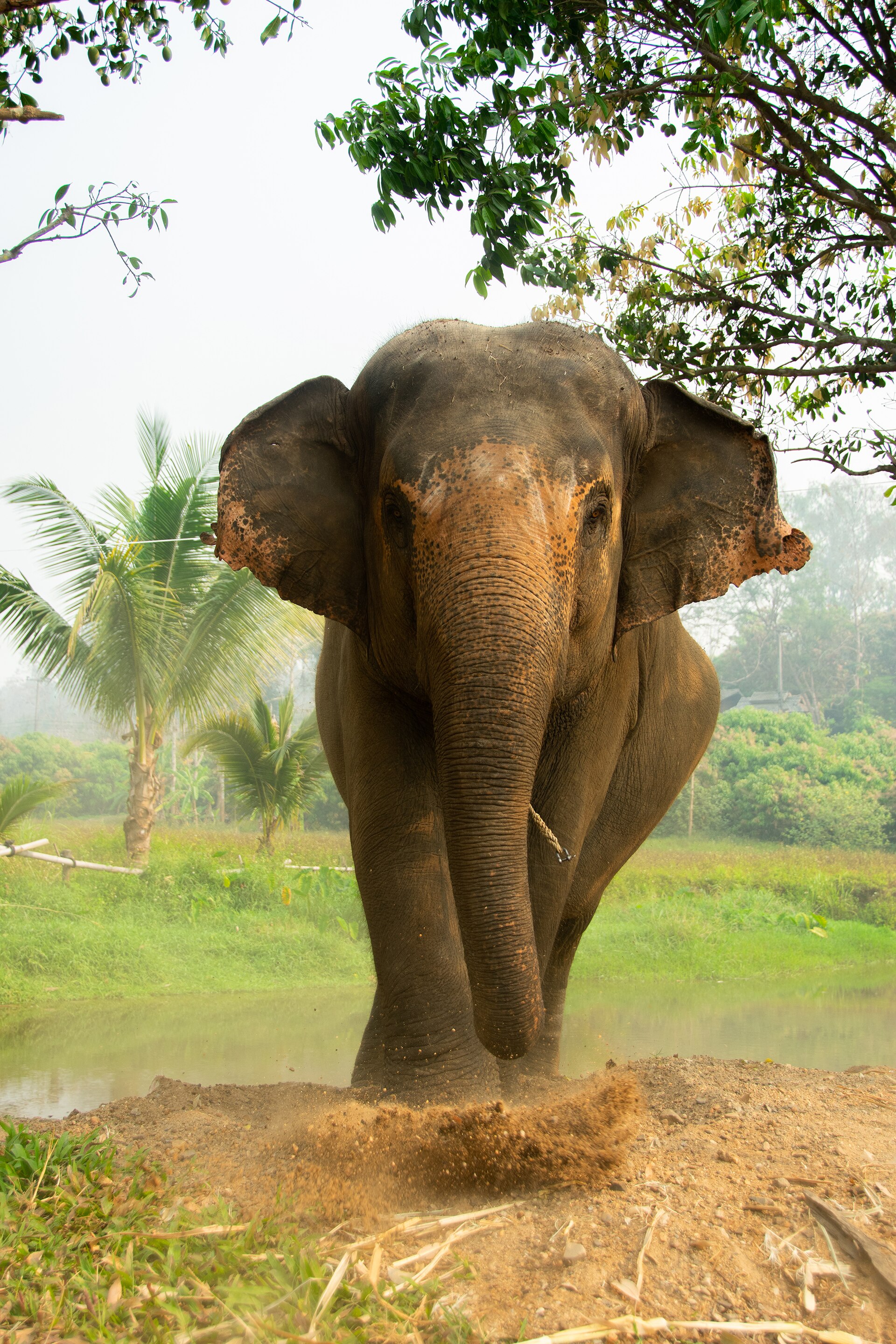
Ethical elephant sanctuaries
Wildlife & NatureChiang Mai is the best place in Thailand to meet elephants responsibly, but the choice of camp matters enormously. Look for genuine welfare-focused, no-riding sanctuaries, the best known being Elephant Nature Park in the Mae Taeng valley, founded by the conservationist Lek Chailert, where rescued elephants (along with dogs, cats, and buffalo) live out their days rather than being ridden or made to perform. A visit typically means observing, feeding, and walking alongside the herd, sometimes helping at a mud bath, all under the eye of mahouts and guides. Most parks lie one to two hours from the city in the surrounding hills, and half or full-day visits usually include hotel transfers and a meal. Book ahead, since the reputable places fill up, and read carefully: avoid anywhere offering elephant rides, painting, or circus tricks, and be wary of camps that simply add the word ethical to their name. Wear clothes and shoes you do not mind getting muddy.
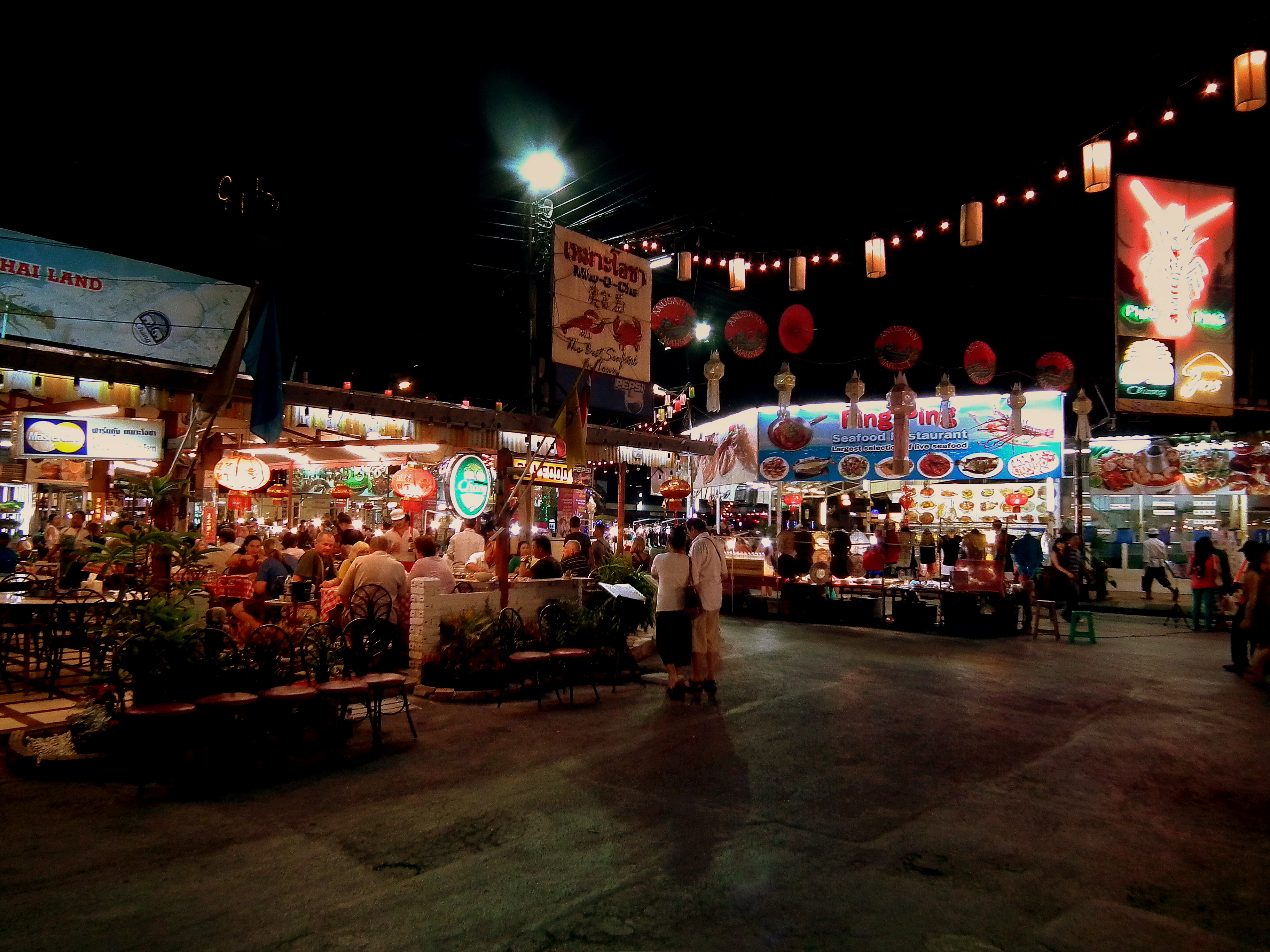
Chiang Mai Night Bazaar
Market & ShoppingRunning nightly along Chang Klan Road east of the old city, the Night Bazaar is Chiang Mai's long-established evening market and the one that trades every day, not just at weekends, which makes it handy if your visit misses the Saturday and Sunday walking streets. Stalls and arcades spill over with northern handicrafts, hill-tribe textiles, silverware, lacquerware, carvings, lanterns, and the inevitable souvenirs and knock-offs, so haggle with a smile and expect to settle well below the first price. Interspersed among the shopping are food courts and beer gardens, notably the Anusarn and Kalare complexes, where you can graze on northern Thai dishes, and rows of foot-massage chairs to revive tired feet. It is busiest and most atmospheric mid-evening. Come with cash in small notes, keep an eye on bags in the crush, and treat it as much as a stroll and a meal as a shopping trip.
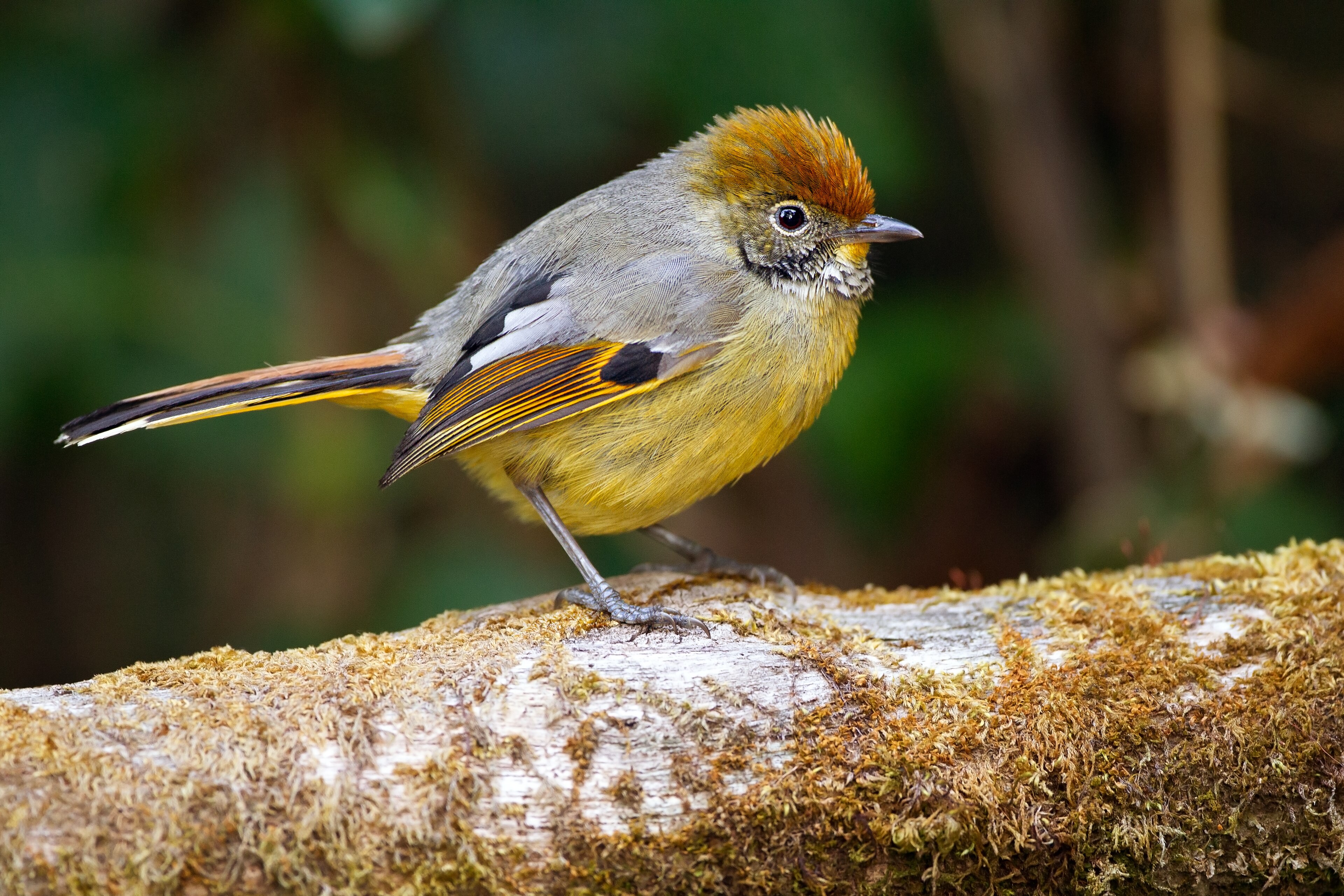
Doi Inthanon National Park
Nature & OutdoorsCrowned by Thailand's highest peak at 2,565 metres, Doi Inthanon lies about two hours southwest of the city and offers a genuinely different climate, cool, misty cloud forest draped in moss and orchids. The signature sight is the pair of royal pagodas, Naphamethinidon and Naphaphonphumisiri, built to honour the late King and Queen and surrounded by immaculate mountain gardens with valley views. Below them the park unfolds into powerful waterfalls like Wachirathan, the short Ang Ka boardwalk through eerie summit forest, Karen and Hmong villages growing coffee and terraced rice at Mae Klang Luang, and the scenic Kew Mae Pan ridge trail, walkable in the cool season with a local guide. Bring a warm layer that surprises many visitors, as dawn near the summit can drop into single digits Celsius, and the reward on a clear early morning is a sea of cloud filling the valleys below. It is a full, rewarding day out.
Sunday Walking Street
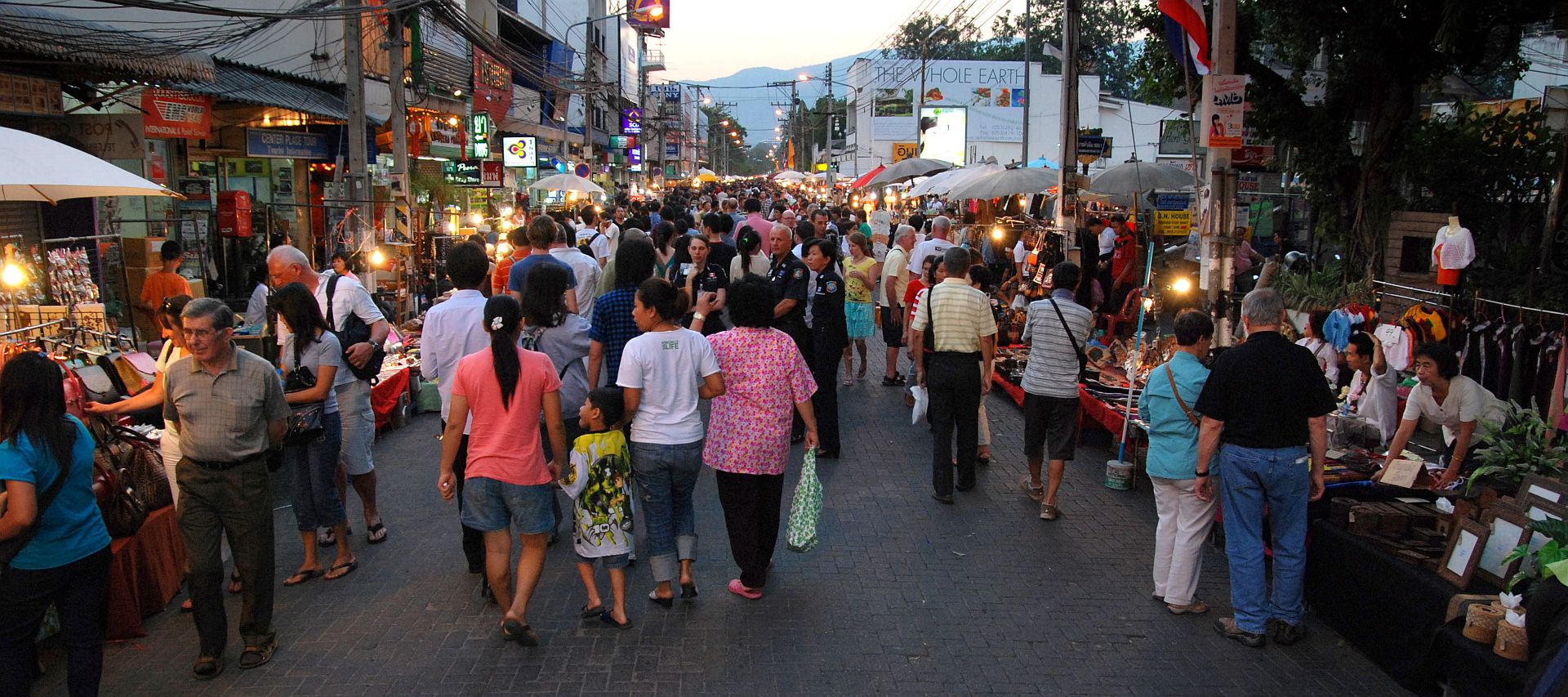
Market & ShoppingEvery Sunday evening the old town's main axis, Ratchadamnoen Road, closes to traffic and transforms into a sprawling craft-and-food market that runs west from the historic Tha Phae Gate deep into the walled city. This is where northern artisans sell directly: hand-dyed textiles, silver, ceramics, paper lanterns, carved wood, art, and quirky one-off pieces you will not find in the regular bazaars, with buskers and musicians playing along the route. Temple courtyards along the way open up as impromptu food courts serving northern specialities, and rows of masseuses offer foot rubs to flagging shoppers. It gets seriously crowded by mid-evening, so come earlier, carry small notes since few vendors take cards, and simply let the flow carry you. If you are in town on a Saturday instead, the Wualai Road walking street in the silversmiths' quarter is a smaller, equally enjoyable alternative.
🎯Things to do & experiences — Chiang Mai
🎈Take a Thai cooking class, most of which begin with a guided market tour before you cook a spread of northern dishes.
🎈Spend an ethical day with rescued elephants at a genuine no-riding sanctuary in the surrounding hills.
🎈Head up to Doi Inthanon or Doi Suthep for cool mountain air, waterfalls, and viewpoints.
🎈Time your trip to the Yi Peng and Loy Krathong lantern festivals in November, when lights fill the sky and float on the river.
🎈Sample the Nimman district's celebrated coffee and cafe scene, a highlight of modern Chiang Mai.
🎈Cool off at the climbable Bua Tong Sticky Waterfalls, whose mineral rock lets you walk straight up the falls.
🎈Browse the craft villages toward San Kamphaeng and Bo Sang, known for silverware, celadon, and hand-painted umbrellas.
🍴Where & what to eat — Chiang Mai
Northern, or Lanna, cooking is milder, earthier, and quite distinct from the food of Bangkok and the south, with Burmese and Yunnanese influences and a love of herbs, chillies, and sticky rice eaten by hand. Chiang Mai also has a Chinese-Muslim (Chin Haw) community, and its mosque quarter near the Night Bazaar is the place to find excellent halal food, which matters for Gulf visitors.
🍽️Khao soi, the famous coconut curry noodle soup with crispy noodles on top, the dish of the north (a halal version is served near the Ban Haw mosque).
🍽️Sai ua, the aromatic grilled northern herb sausage sold at markets everywhere.
🍽️Nam prik noom and nam prik ong, roasted-chilli dips eaten with sticky rice and fresh vegetables.
🍽️Khantoke, a traditional shared northern feast often served with a cultural show.
🍽️The mosque-quarter halal food street off Charoen Prathet Road, handy and authentic for Muslim travellers.
🍽️Nimman's third-wave coffee and cafes, a genuine part of the city's food culture.
Plan your trip with Seen