📍Destinations — Chiang Rai
Pick a destination for full details
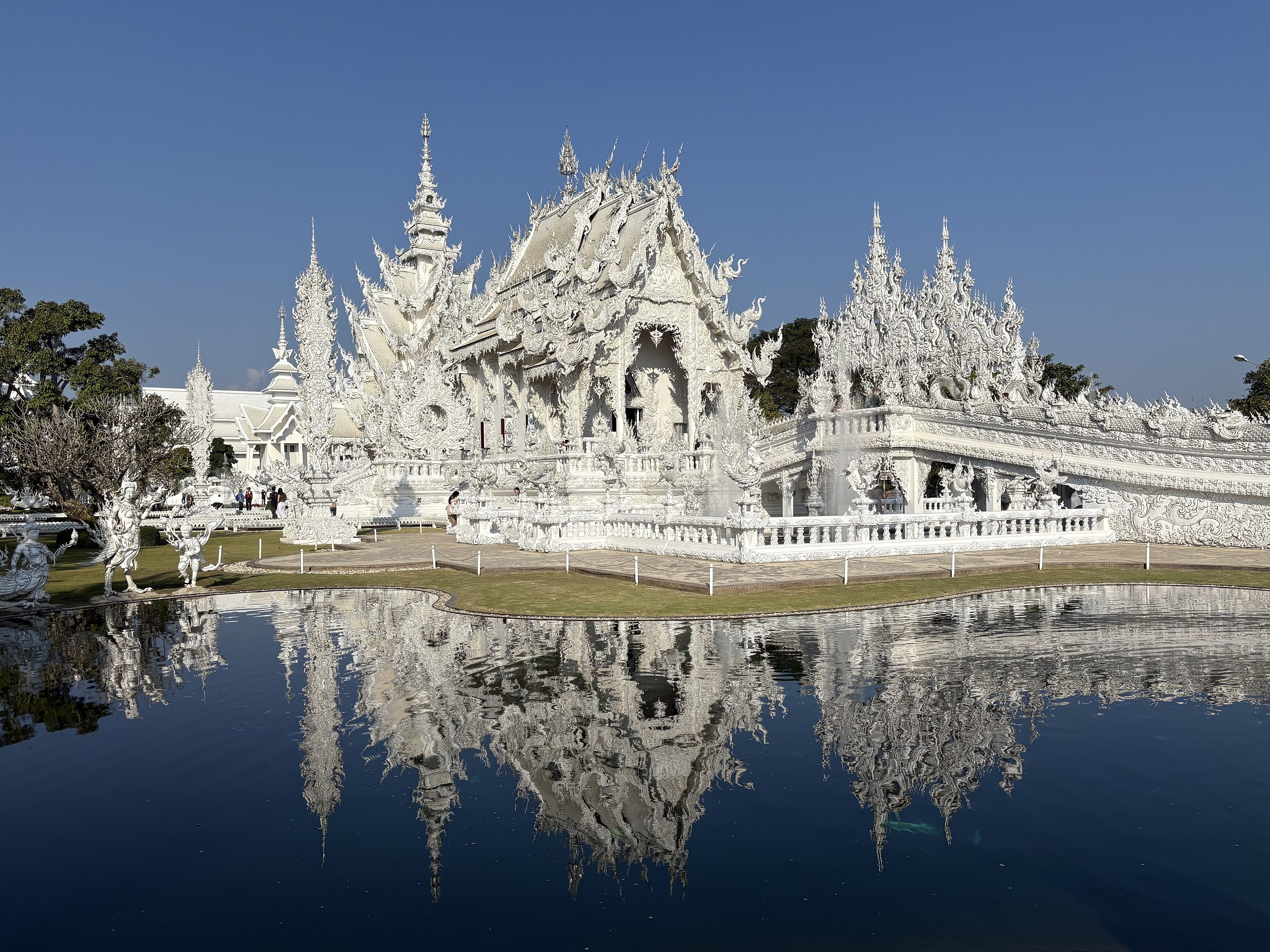
White Temple (Wat Rong Khun)
ArchitectureThe White Temple, properly Wat Rong Khun, is Chiang Rai's most famous sight and one of the most unusual buildings in Thailand, a dazzling all-white contemporary art temple begun in 1997 by the Thai artist Chalermchai Kositpipat and still growing today. Unlike a historic temple, it is a privately owned artwork built as an offering, its brilliant whiteness symbolising the purity of the Buddha and its countless fragments of mirrored glass catching the sun to represent his radiant wisdom. Visitors approach across a dramatic bridge over a pit of hundreds of outreaching hands, an unsettling image of desire and suffering, before entering a hall whose murals famously blend Buddhist teaching with modern pop-culture imagery. The craftsmanship, from the filigree spires to the guardian figures, is extraordinary, and the whole complex is deliberately provocative and thought-provoking. It sits about thirteen kilometres south of the city. As a place of worship it asks for modest dress and quiet, respectful behaviour inside.
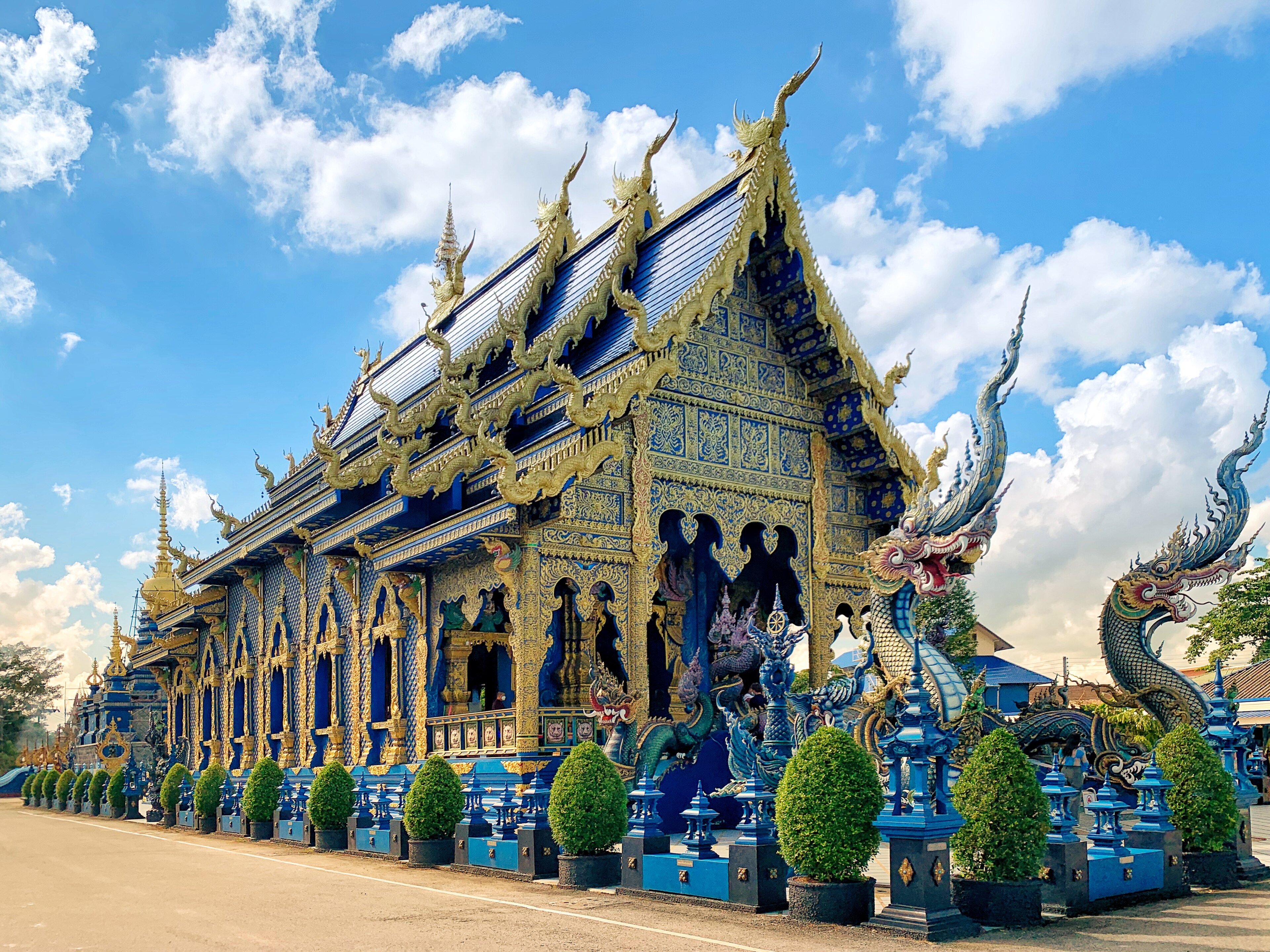
Blue Temple (Wat Rong Suea Ten)
ArchitectureThe Blue Temple, or Wat Rong Suea Ten, meaning the Temple of the Dancing Tiger, is the striking younger sibling to the White Temple and was completed only around 2016. Its exterior and interior are washed in vivid sapphire and cobalt blue, picked out with gold, a colour scheme meant to evoke the dharma and the vastness of the sky and to radiate calm. Inside, an elegant pure-white seated Buddha glows against the deep-blue walls and richly painted columns, creating one of the most photogenic temple interiors in the north. It was designed by Putha Kabkaew, a local artist who trained under Chalermchai Kositpipat, the creator of the White Temple, so the two share a bold, contemporary sensibility. Because it lies just north of the city centre across the Kok River, it is quick and easy to combine with the other art sites. It remains an active temple, so modest dress and quiet respect are expected, and the interior is best appreciated unhurried.
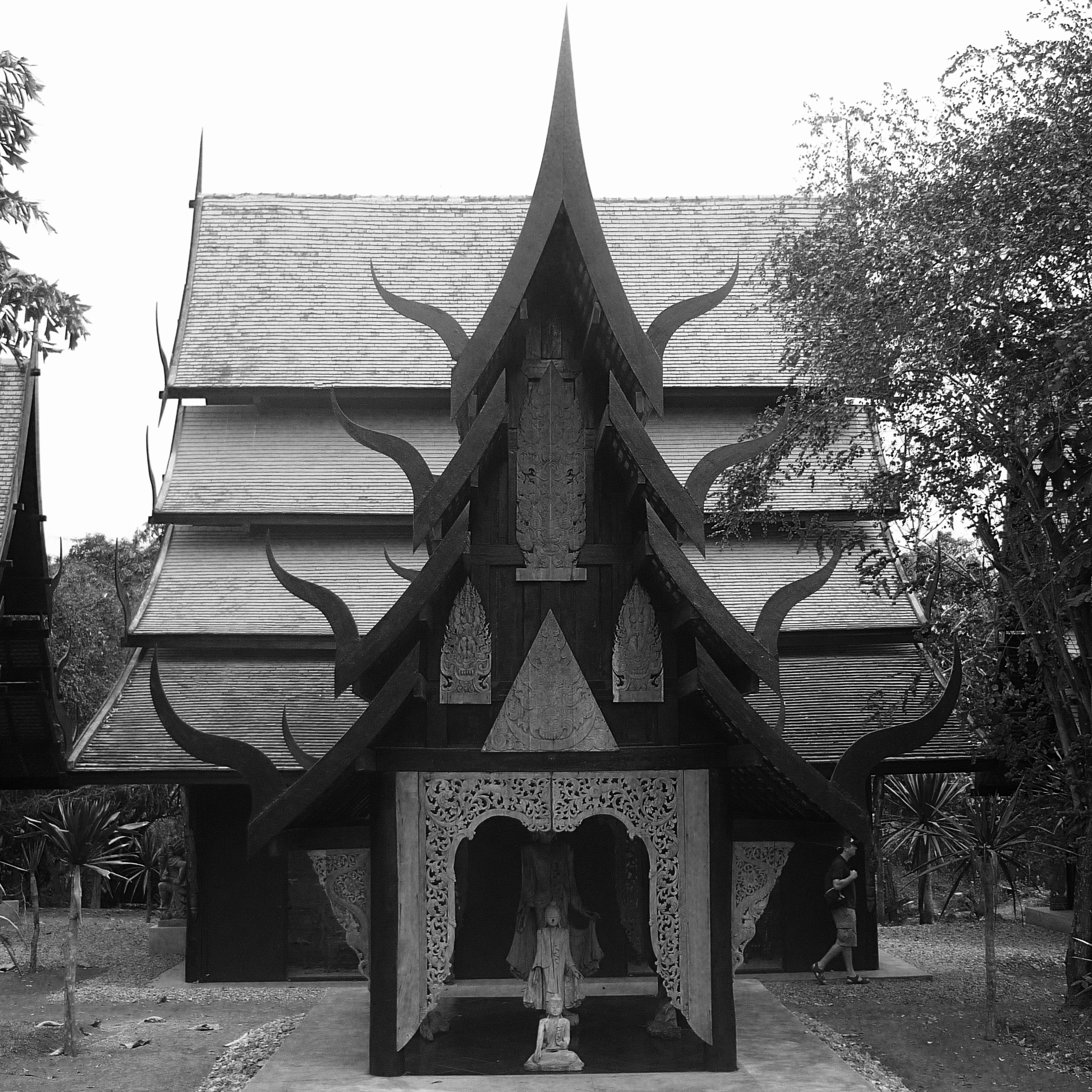
Baan Dam Museum (Black House)
MuseumBaan Dam, widely known as the Black House, completes Chiang Rai's trio of artist-built landmarks and is the darkest and strangest of the three, the life's work of the late National Artist Thawan Duchanee. Rather than a single building, it is a sprawling compound of around forty structures, most of them raised in traditional northern Lanna style but stained a brooding black, set among lawns and trees north of the city. Inside, Thawan filled the halls with his unsettling collections: animal bones, hides, horns, skulls, snakeskins and dark wood carvings, arranged as meditations on impermanence, death and the darker side of nature, a deliberate counterpoint to the luminous purity of the White Temple. The effect is part museum, part art installation, part ritual space, and it is genuinely unlike anywhere else. Wandering the grounds and peering into the individual buildings takes an hour or more. It is a place for reflection and photography rather than worship, and younger children may find some exhibits macabre.
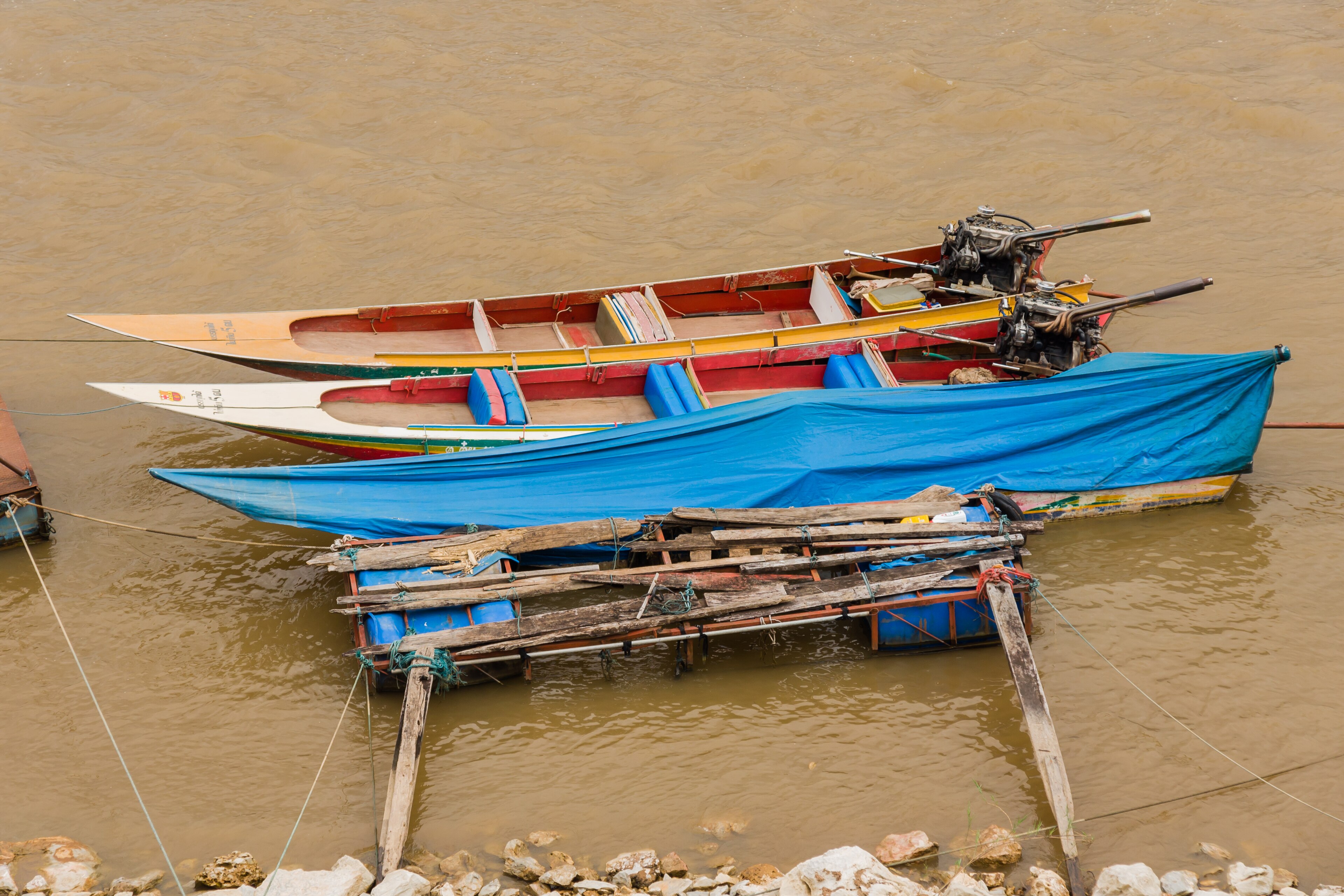
Golden Triangle (Sop Ruak)
LandmarkThe Golden Triangle is the fabled point where the borders of Thailand, Laos and Myanmar converge at the confluence of the Ruak and Mekong rivers, around sixty kilometres north of Chiang Rai near the old town of Chiang Saen. The name once referred to the wider region's notorious history as a centre of the opium trade, and that story is told thoughtfully at the excellent Hall of Opium museum nearby, which traces the drug's history and its human cost. Today the meeting point itself is a scenic and peaceful spot, marked by riverside viewpoints, a large golden Buddha and ornamental gateways, from where you can gaze across the wide Mekong into two neighbouring countries at once. Short longtail-boat trips run out onto the river, sometimes pausing at a Laotian island market. It makes a rewarding day trip from the city, often combined with the riverside ruins and temples of historic Chiang Saen. The setting is especially atmospheric in the clear light of morning.
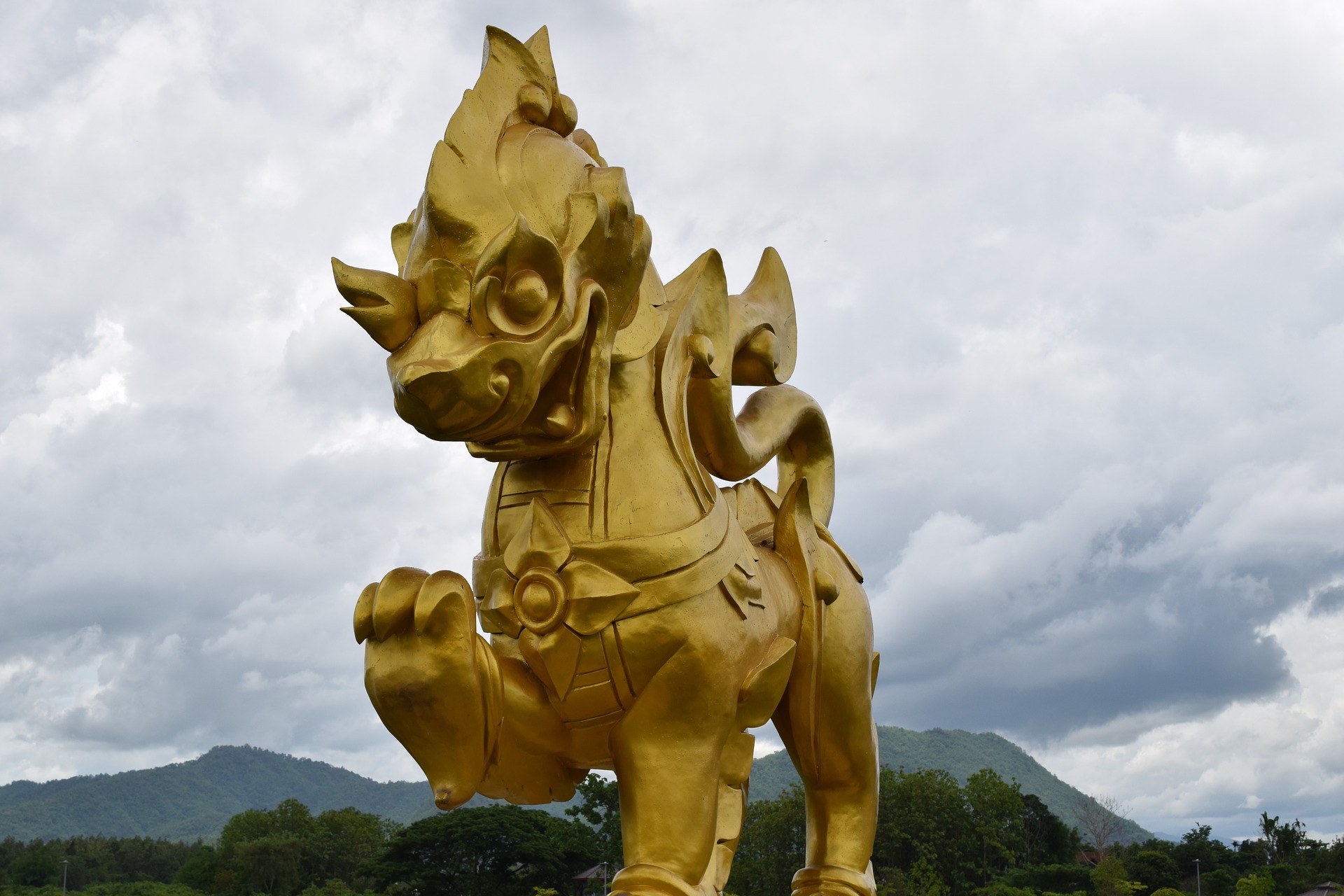
Singha Park
NatureSingha Park is a vast landscaped agritourism estate on the edge of Chiang Rai, owned by the company behind Singha beer and built around working tea plantations, farmland and flower gardens. Its rolling green tea terraces, photogenic lake and giant lion mascot have made it one of the city's most popular days out, especially for families. Visitors can ride a hop-on tram tour around the grounds, cycle the quiet lanes, walk the flower fields, meet farm animals in the petting areas, or take on a zip-line and rope courses built for older children and adults. There is a large cafe and restaurant serving produce grown on the estate, including its own tea. The scenery of manicured hills and open sky is a relaxing contrast to the city's temples and museums, and the park hosts a well-known hot-air balloon festival in the cool season. Its size means a tram or a bicycle is the sensible way to get around.
Choui Fong Tea Plantation
NatureSet in the hills of Mae Chan district, roughly thirty kilometres north of the city, the Choui Fong tea plantation is one of northern Thailand's most beautiful and photogenic landscapes, its neat rows of tea bushes rippling in green contour lines across the rolling hillsides. It is a genuine working plantation, one of the largest in the country, and the cool highland climate here is ideal for the oolong and green teas the north is known for. The draw for visitors is a stylish modern cafe and viewpoint, its roof shaped like tea leaves, perched above the terraces and serving freshly brewed local teas alongside green-tea cakes, matcha desserts and light meals with a sweeping panorama over the fields. Walking paths let you get in among the tea rows for photographs, best in the soft light of early morning when the hills are often wrapped in mist. It combines naturally with a wider drive through the tea and mountain country north of Chiang Rai.
🎯Things to do & experiences — Chiang Rai
🎈Art-temple loop taking in the White Temple, Blue Temple and Baan Dam Black House in a single day
🎈Day trip north to the Golden Triangle and the riverside ruins of Chiang Saen
🎈Scenic drive through the tea country to Choui Fong and the mountain viewpoints
🎈Visit the giant white Guanyin statue and mountain-top temple of Wat Huay Pla Kang
🎈Family day out at Singha Park with its tram tour, cycling and zip-lines
🎈Explore the Chiang Rai night bazaar and Saturday walking street for northern food and crafts
🎈Boat trip on the Mekong, or a drive up to the tea and coffee villages of Doi Mae Salong
🍴Where & what to eat — Chiang Rai
Chiang Rai's kitchen is northern Thai, or Lanna, cooking, milder and earthier than the south and shaped by the cool climate and the region's Shan, Yunnanese and hill-tribe influences.
🍽️Khao soi, the north's signature coconut curry noodle soup topped with crisp fried noodles
🍽️Northern specialities such as sai ua herby grilled sausage and nam prik chilli dips with sticky rice
🍽️Locally grown teas and coffee from the surrounding mountain plantations
🍽️Yunnanese-Chinese dishes reflecting the area's border heritage, especially around Mae Salong
🍽️Northern street food and khao soi stalls at the Chiang Rai night bazaar and Saturday walking street
Plan your trip with Seen