📍Destinations — Kanchanaburi
Pick a destination for full details
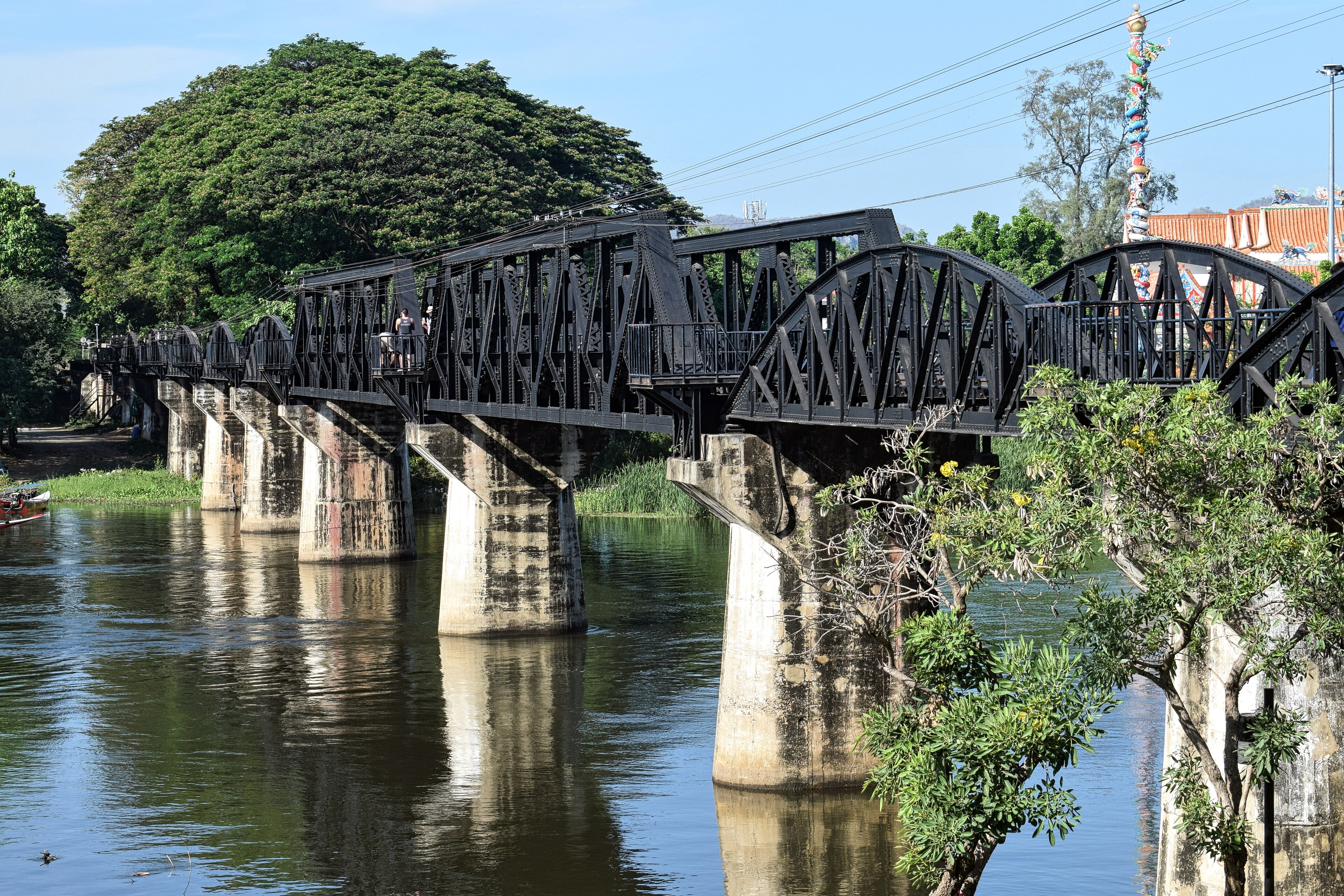
Bridge over the River Kwai
HistoricalThe famous black iron bridge in Kanchanaburi town is the single most visited relic of the Death Railway, and a genuine survivor of the war. Built by prisoners of war and Asian labourers in 1942 and 1943, it was bombed by Allied aircraft late in the war; the two angular, straight-sided central spans are post-war replacements, while the curved spans at each end are original. You can walk across the sleepers on foot, stepping into the marked refuge platforms when a train approaches, since the line still carries services today. A short tourist train from the town station rumbles slowly over the bridge and on along the river, which is a moving way to sense the scale of what was built. The setting is scenic, but remember what it cost: read a little history first so the crossing means more than a photo. Early morning is coolest and least crowded. The nearby night market and riverside restaurants make an easy evening.
Death Railway Train Ride & Wampo Viaduct
HistoricalRiding a stretch of the Death Railway itself is the most atmospheric way to grasp its story. The surviving line runs from Kanchanaburi to the terminus at Nam Tok, and the ordinary state railway train covers it slowly and cheaply several times a day. The dramatic highlight is the Wampo, or Wang Pho, Viaduct, a curving wooden trestle that clings to the sheer cliff face directly above the River Kwai Noi, built entirely by hand by prisoners and labourers. As the carriage inches along it, the drop to the river opens up beside your window. The whole route threads through jungle, past rice fields and small memorials, and the pace leaves plenty of time to reflect on the appalling human cost of laying these rails. Sit on the river side of the carriage for the best views over the viaduct. Combine the ride with Hellfire Pass further up the line for the fuller, and more moving, picture.
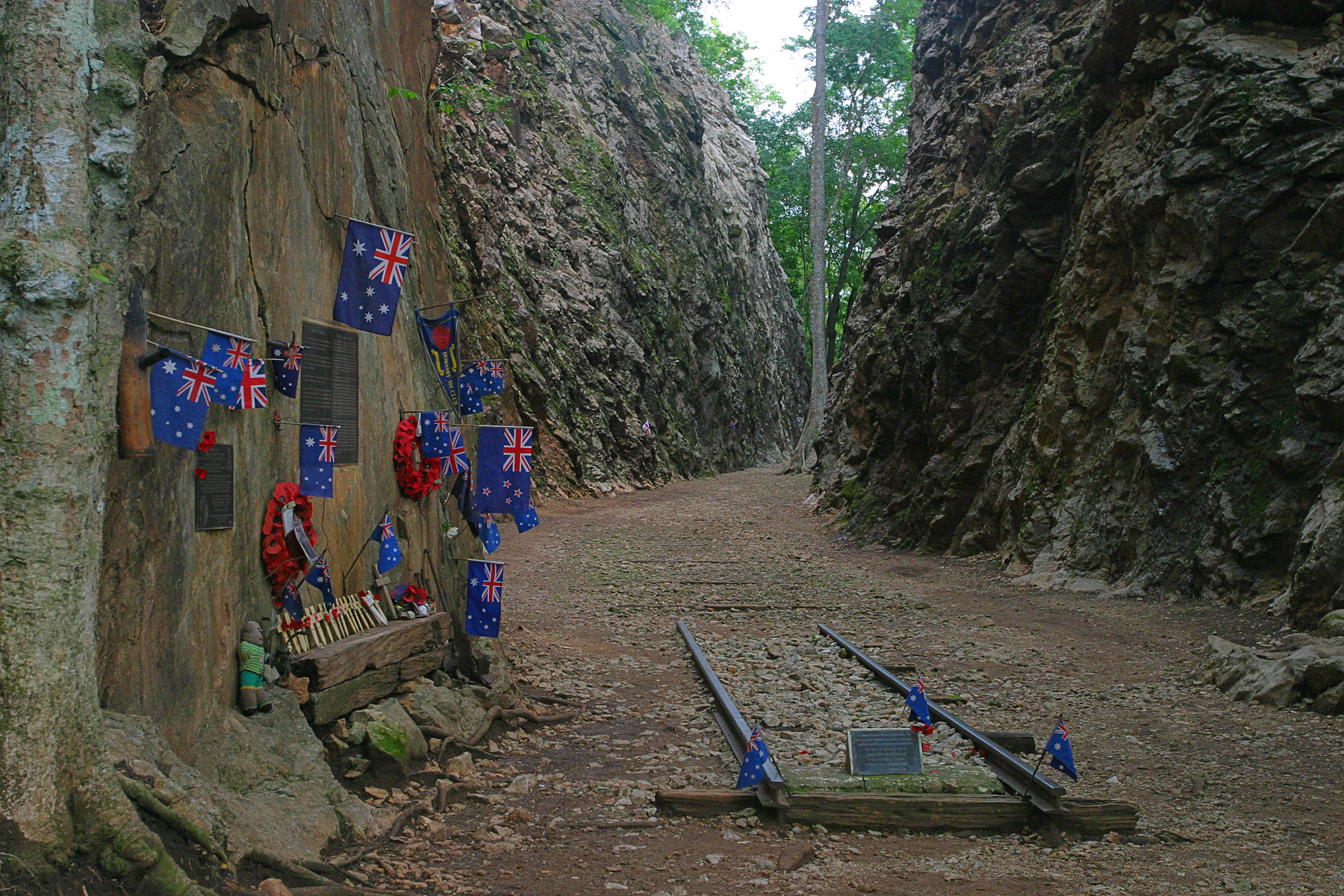
Hellfire Pass Memorial
MemorialHellfire Pass, known to the engineers as the Konyu Cutting, is the most harrowing and moving site on the whole railway. Here prisoners of war and Asian labourers hacked a deep passage through solid rock, largely by hand with hammers, drills and baskets, working around the clock. The name comes from the sight of emaciated, torch-lit workers toiling through the night, which survivors said resembled a scene from hell. Many died in these weeks during the so-called 'Speedo' period, when the pace was driven mercilessly. Today an excellent memorial museum, funded by the Australian government, tells the story soberly through survivors' testimony, and a well-made walking trail leads down through the actual cutting, where you walk the same ground in silence. It is a place for reflection, not entertainment: allow time, read the panels, and treat it with the gravity it demands. Wear decent shoes and bring water for the trail, which climbs on the return.
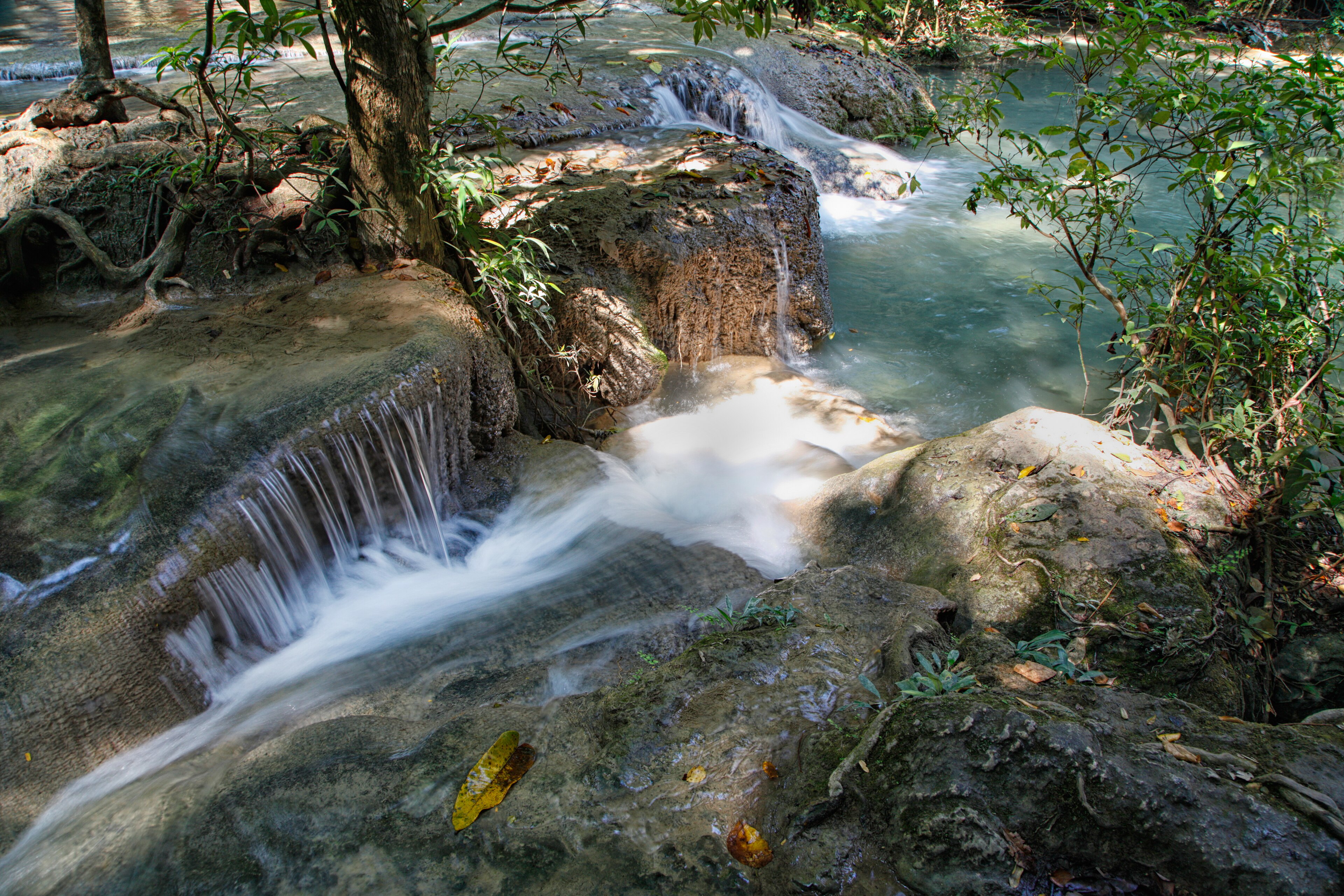
Erawan Falls & Erawan National Park
WaterfallErawan is the waterfall that puts Kanchanaburi on postcards, and it lives up to the billing. Set inside Erawan National Park about an hour and a half northwest of town, it climbs through seven distinct tiers over roughly two kilometres of forest trail, each level with its own emerald-green plunge pool. The colour comes from the limestone-rich water, and small fish nibble harmlessly at your feet when you swim. The lower tiers are easy strolls and get busy; the upper levels, especially the seventh, named for its supposed resemblance to Erawan the three-headed white elephant of Hindu myth, involve a proper scramble over roots and rocks and reward you with the quietest, prettiest pools. Wear water shoes, carry as little as possible, and start early. The park limits how late you can begin climbing to the top tiers, so do not dawdle. Beyond the falls, the wider park holds caves and forest trails if you want to linger.
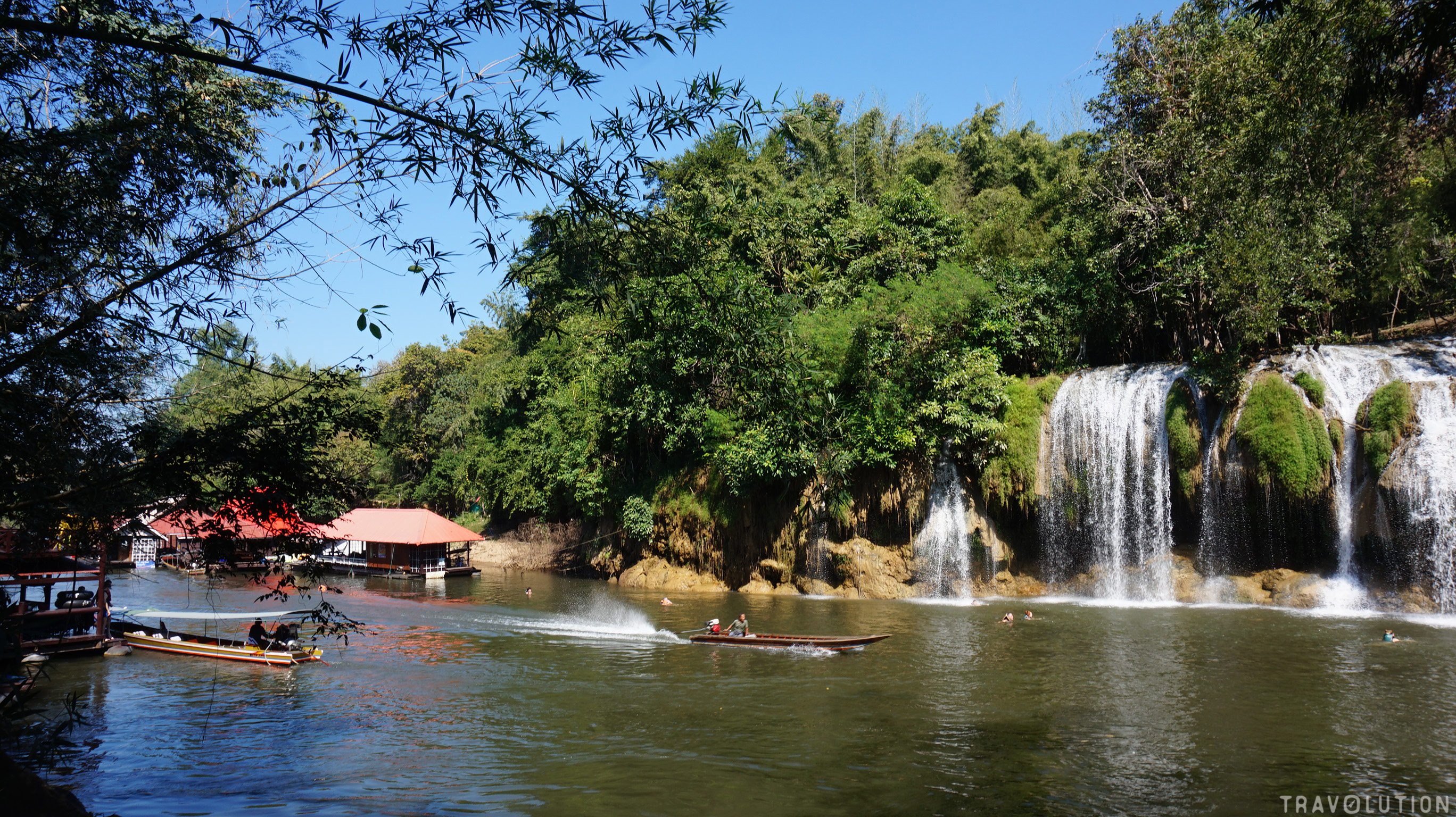
Sai Yok Waterfall & National Park
NatureFurther up the valley, Sai Yok National Park offers a wilder, less crowded counterpoint to Erawan. Its signature sight is Sai Yok Yai, an unusual waterfall that tumbles straight into the River Kwai Noi, best seen and photographed from a longtail boat or the park's suspension bridge. The park is thick jungle laced with limestone caves, including the Daowadung caves, and it carries its own wartime traces along the old railway route. It is also a place of natural curiosities: this is one of the homes of Kitti's hog-nosed bat, the tiny 'bumblebee bat' that ranks among the smallest mammals on earth. Closer to town, the smaller Sai Yok Noi waterfall sits beside the railway and is an easy roadside stop that Thai families love on weekends. Staying overnight in the park, often in a floating raft house, lets you swim in the river and wake to birdsong. Bring insect repellent for the jungle evenings.
Floating Raft House Stay on the River Kwai
AdventureSleeping on the river is one of Kanchanaburi's signature experiences, and unlike anywhere else in Thailand. Up and down the River Kwai, resorts moor rows of simple bungalows on bamboo and pontoon rafts, so your room floats directly on the water, rocking gently with the current. They range from rustic, no-frills huts with cold-water bathrooms to surprisingly plush floating villas, some so remote they run on generator power and are reached only by boat. The joy is in the setting: you can step off your deck straight into the cool green river for a swim, watch mist rise off the water at dawn, and fall asleep to the sound of the current. Many raft resorts cluster upriver toward Sai Yok, away from the town lights, for total quiet. Bring a torch and mosquito repellent, pack light, and lower your expectations on wifi and hot water at the rustic end. It is about disconnecting, and it delivers.
🎯Things to do & experiences — Kanchanaburi
🎈Walk across the original Bridge over the River Kwai
🎈Ride the Death Railway along the cliffside Wampo Viaduct
🎈Reflect at the Hellfire Pass memorial and its walking trail
🎈Pay respects at the Kanchanaburi War Cemetery in town
🎈Swim through the seven emerald tiers of Erawan Falls
🎈Sleep in a floating raft house on the river
🎈Visit the Thailand-Burma Railway Centre museum for the full story
🍴Where & what to eat — Kanchanaburi
Kanchanaburi's food is best enjoyed by the water, with floating and riverbank restaurants strung along the Kwai serving freshwater fish and honest Thai cooking. The town also has a lively night market near the bus and train stations. Nothing here is fancy, but the riverside setting does a lot of the work.
🍽️Riverside and floating restaurants serving fresh river fish and Thai curries
🍽️The lively Kanchanaburi night market near the station for cheap local eats
🍽️Grilled giant river prawns, a speciality of the Kwai valley
🍽️Whole steamed fish with chilli, lime and herbs, eaten over the water
🍽️Casual noodle and rice shops along the main riverside strip
Plan your trip with Seen