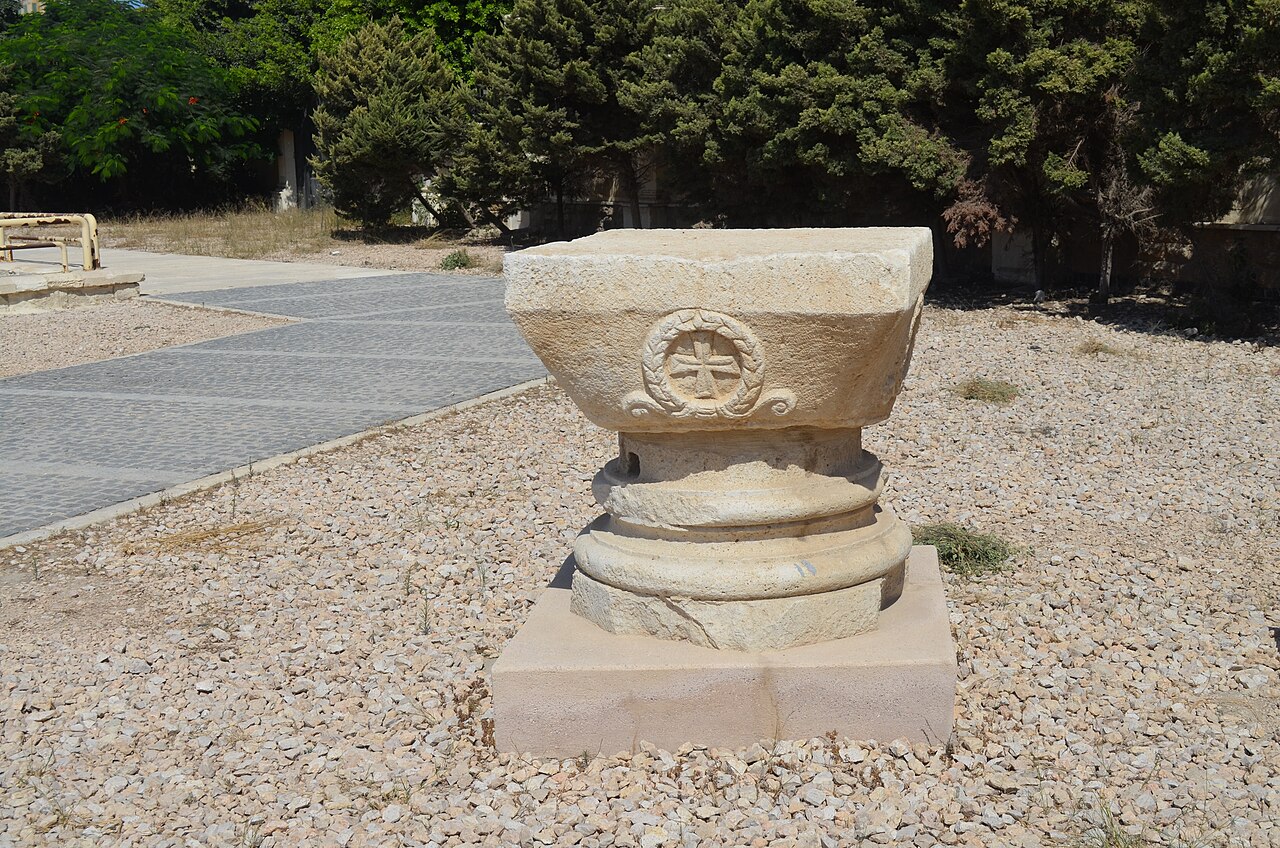
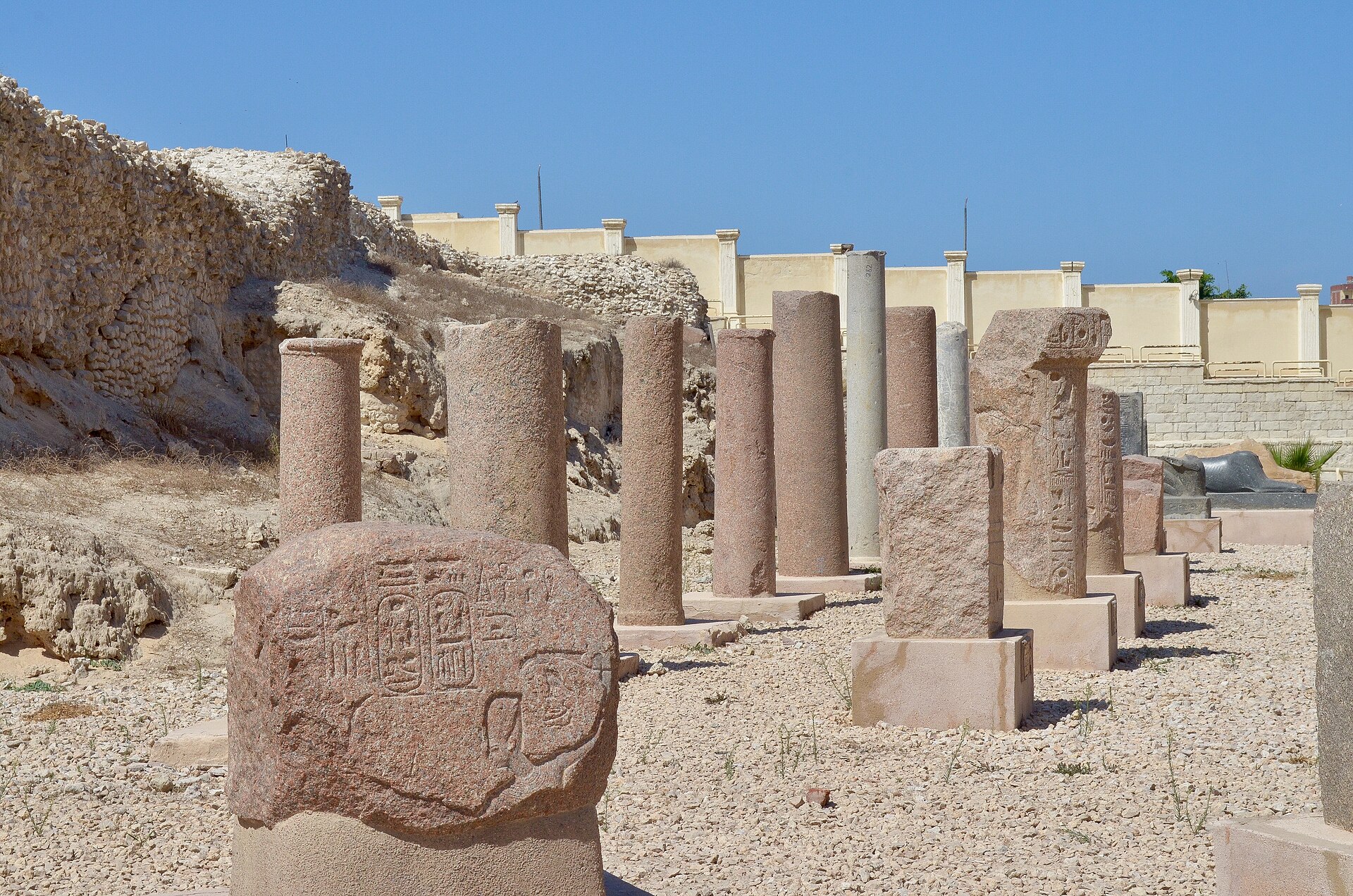
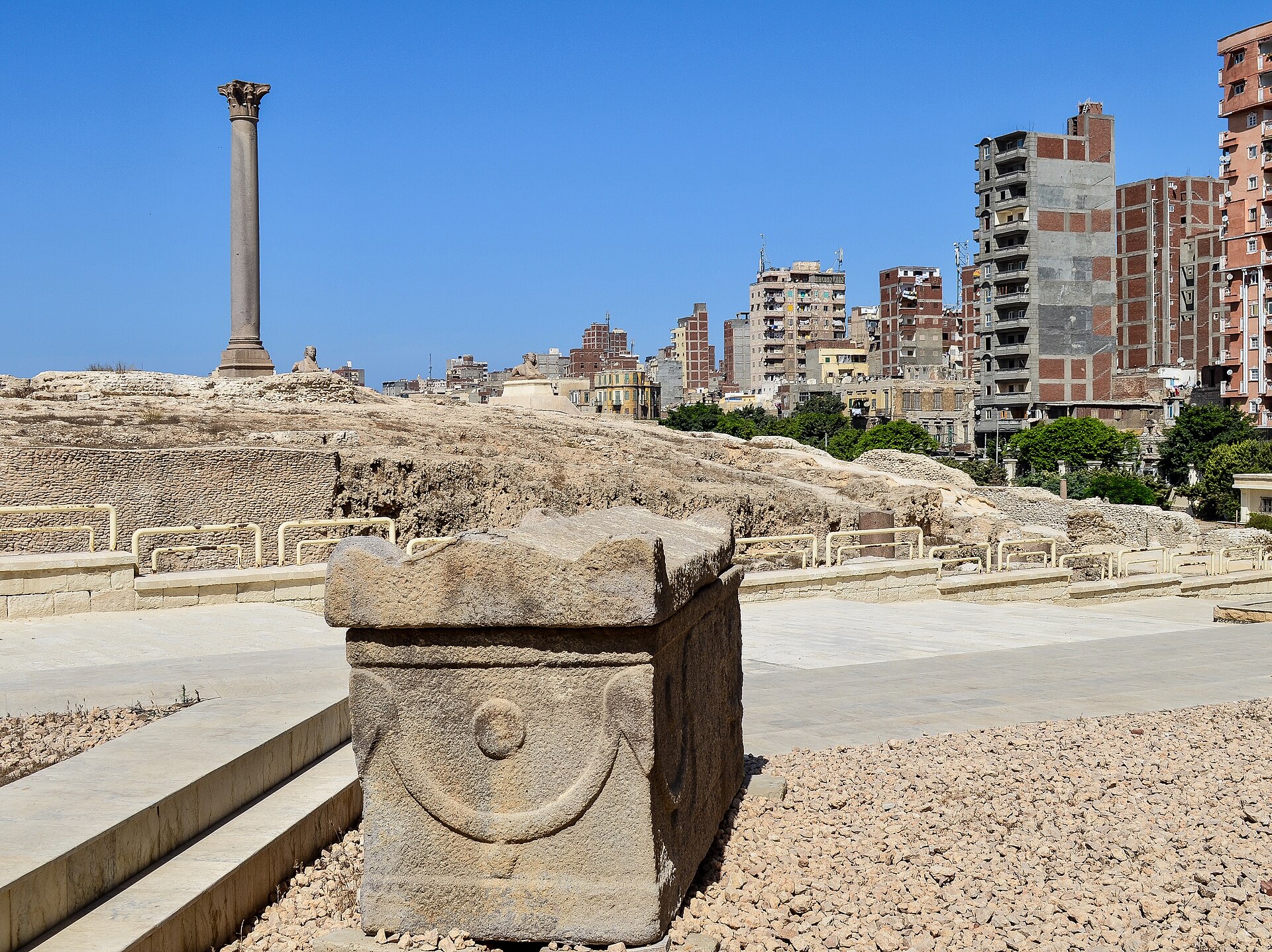
Pompey's Pillar is a single monumental column of polished red Aswan granite, close to twenty-seven metres tall, standing on the low hill of the ancient Serapeum, the temple of the god Serapis that was once one of Alexandria's grandest sacred sites. The name is a medieval mistake: Crusaders assumed it marked Pompey's grave, but an inscription on the base shows it was actually raised around 297 AD in honour of the emperor Diocletian. It is among the tallest ancient monolithic columns still standing where it was first set up. Around it lie the scattered remains of the temple complex, a pair of granite sphinxes, and, most interestingly, underground galleries that once held the Serapeum's sacred archives and part of the great library's overflow. The site is compact and open-air, more a quick stop than a half-day, but it carries huge weight as the last above-ground trace of ancient Alexandria's most important temple.
Plan your trip with Seen