📍Destinations — Luxor
Pick a destination for full details
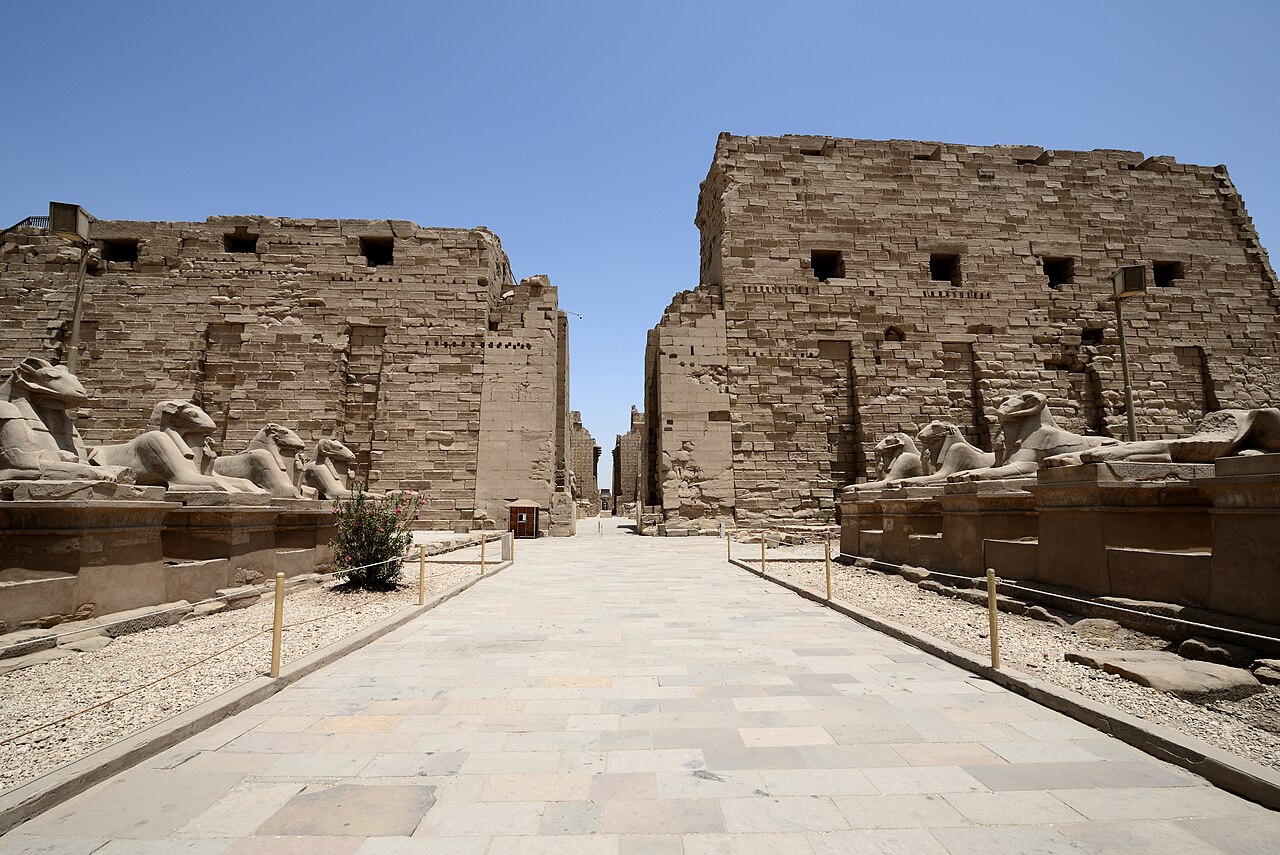
Karnak Temple
Temple complexKarnak is not one temple but a whole sacred city, built, added to and rebuilt over more than 1,500 years by successive pharaohs, and its scale genuinely overwhelms. You enter down an avenue of ram-headed sphinxes and through a massive unfinished pylon into court after court, but nothing prepares you for the Great Hypostyle Hall: 134 stone columns crammed into a petrified forest, the central twelve rising some 21 metres with papyrus-bud capitals wide enough for dozens of people to stand on top. Sunlight slants between them onto carved and once-painted reliefs, and you feel genuinely tiny. Look for the pair of towering pink-granite obelisks of Hatshepsut, the sacred lake, and the atmospheric back precincts where few groups bother to walk. It rewards slow, unhurried wandering rather than a quick march-through. An evening sound-and-light show sends visitors through the lit halls with narrated history if you want to see it twice.
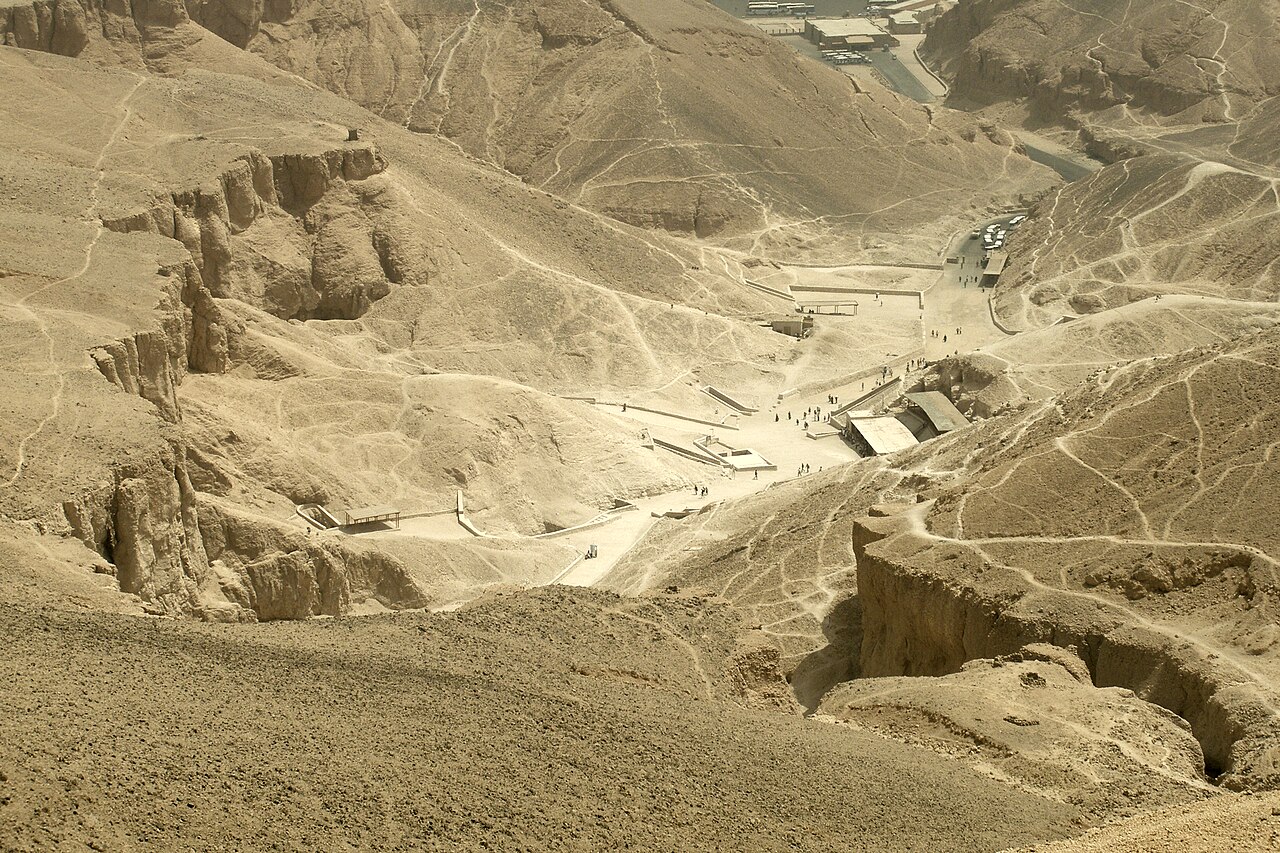
Valley of the Kings
Royal tombsThe burial ground of the New Kingdom pharaohs hides in a barren desert valley behind the Theban cliffs, chosen precisely because it looked like nowhere worth robbing. Over sixty tombs honeycomb the rock, with eight to ten open on any given day, rotated to limit wear. Your standard ticket covers three; the finest, Seti I with its complete painted decoration, and Tutankhamun, whose actual mummy still lies in his surprisingly small tomb, need separate tickets. Down long, sloping corridors the colour survives astonishingly well: the star-spangled ceilings and yellow-gold walls of Ramesses VI, the vivid scenes of Ramesses III, the sunken relief of Merenptah. A little electric train carries you from the visitor centre into the valley. Go as early as you can, it becomes a furnace by late morning, and buy the general photo ticket if you want to shoot inside. Choose depth over quantity: three great tombs beat ten quick ones.
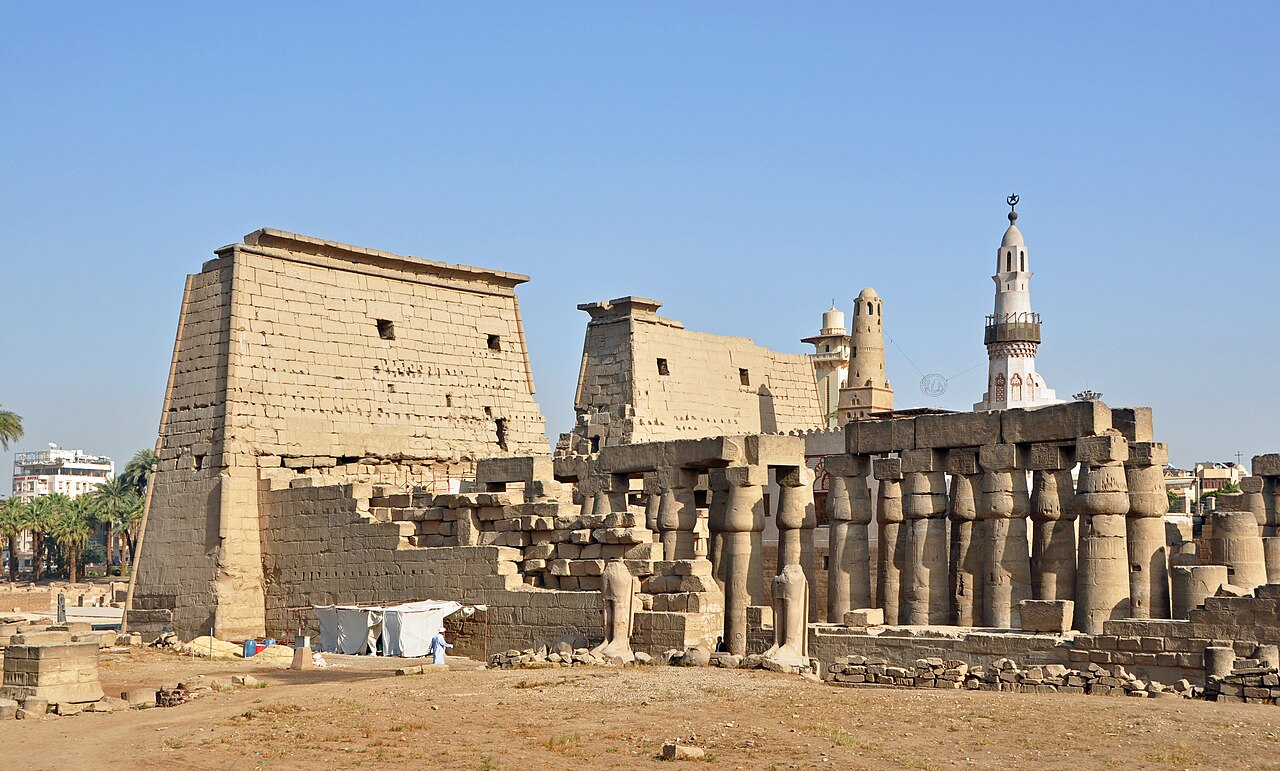
Luxor Temple
Nile templeRight in the centre of town on the Nile corniche, Luxor Temple is more intimate and coherent than Karnak, and best saved for after dark. The entrance pylon is flanked by giant seated statues of Ramesses II and a single pink-granite obelisk, its twin standing in Paris on the Place de la Concorde. Beyond lies the graceful colonnade of Amenhotep III, its papyrus columns among the most elegant in Egypt, leading to sun-drenched courts and inner sanctuaries. What makes the temple unusual is its layers: a medieval mosque, still in use, perches improbably halfway up one wall, and faded Roman and early-Christian paintings mark where it once served as a church, three thousand years of continuous worship on a single spot. The recently reopened Avenue of Sphinxes, a nearly three-kilometre processional road, again links it to Karnak. Come in the evening, when floodlights turn the columns gold and the crowds thin.
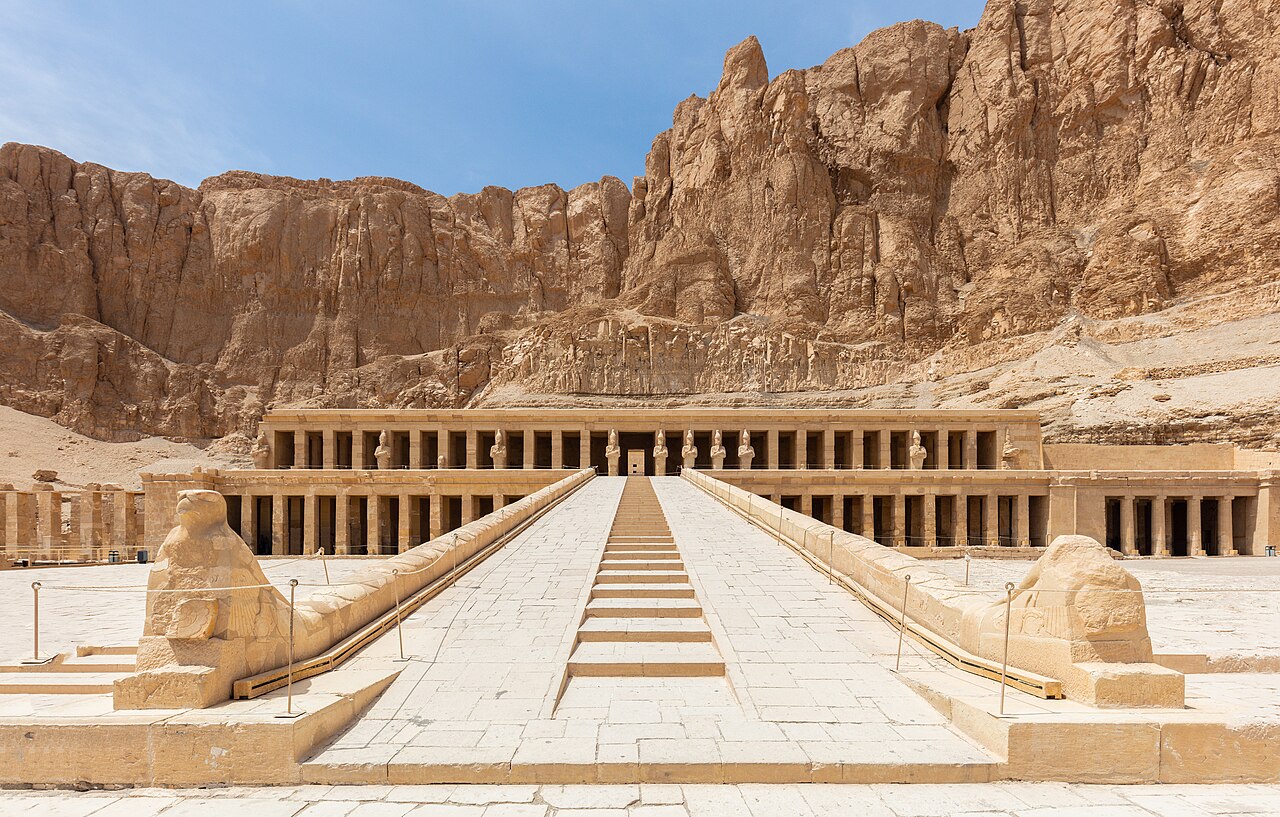
Temple of Hatshepsut (Deir el-Bahari)
Mortuary templeSet against a sheer amber cliff on the West Bank, Hatshepsut's mortuary temple is the most architecturally striking monument in Luxor, three broad colonnaded terraces linked by long ramps that look almost modern in their clean symmetry. Hatshepsut was one of very few women to rule Egypt as pharaoh, and she built on a scale to match any king; after her death her successor tried to erase her, chiselling out her image, which you can still see hacked from the walls. Climb the terraces to find the delicate reliefs: the famous trading expedition to the land of Punt with its laden ships and exotic goods, scenes of her divine birth, and the little Hathor chapel with cow-headed columns. The setting, pale colonnades glowing against red rock, is unforgettable, especially in early light. There is almost no shade, and the stone amphitheatre traps heat fiercely, so come at opening and carry water.
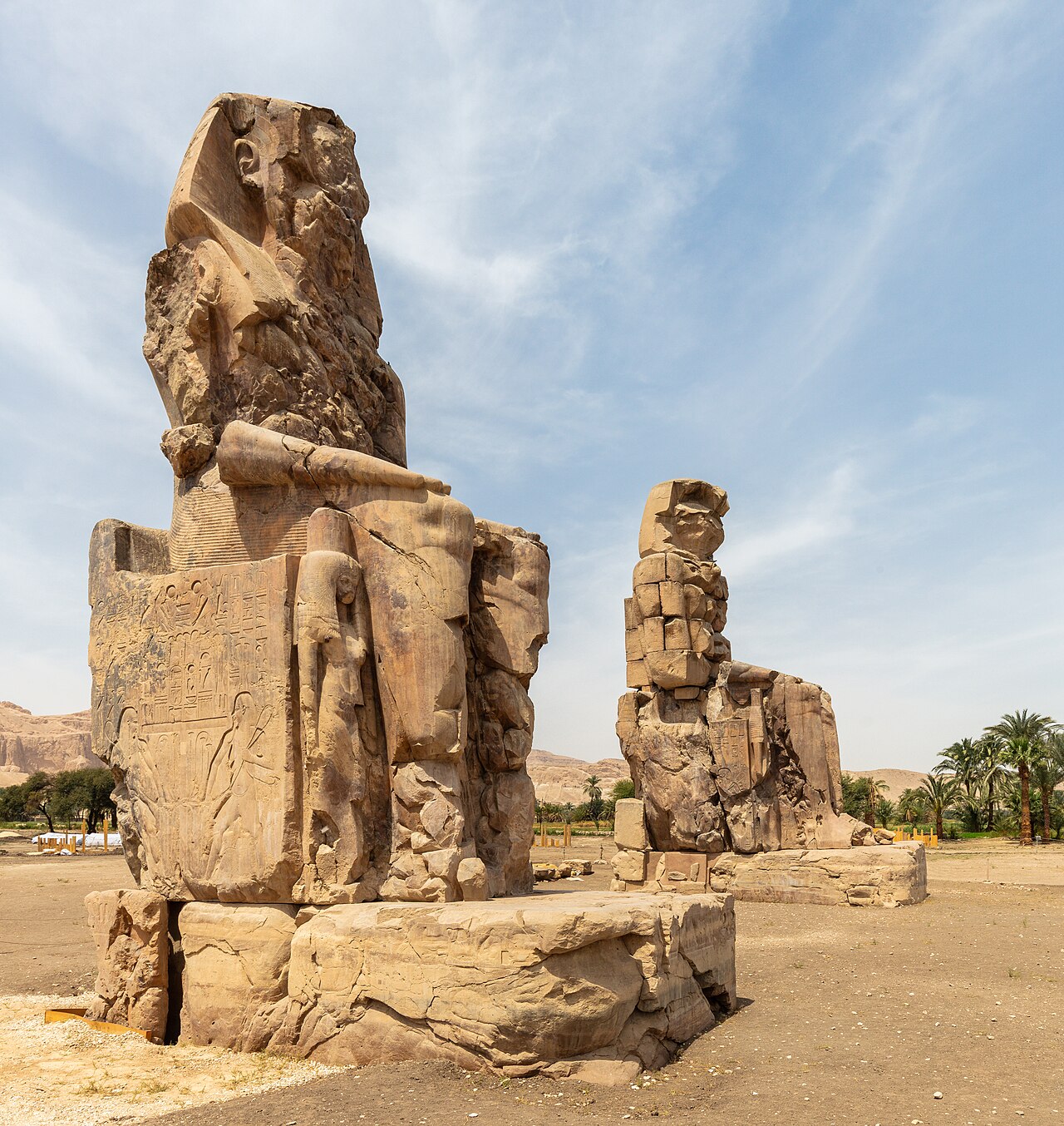
Colossi of Memnon
Ancient statuesTwo colossal quartzite figures, some eighteen metres tall and badly weathered, sit alone facing the sunrise on the road into the West Bank, and almost everyone stops for a photo. They are all that was long visible of the enormous mortuary temple of Amenhotep III, once the largest in Egypt, flattened by earthquake and quarried away over the centuries. Their real fame is a quirk: after an earthquake cracked the northern statue around 27 BC, it began emitting a strange musical note at dawn as the morning warmth expanded the stone. Greek and Roman tourists travelled here to hear the singing Colossus of Memnon and scratched their names on its legs, until Roman restorers repaired the crack and silenced it forever. Behind the statues, ongoing excavation is steadily uncovering more of the buried temple and further shattered colossi. It is a five-minute stop, but a poignant one, and the classic first sight as you cross to the West Bank.
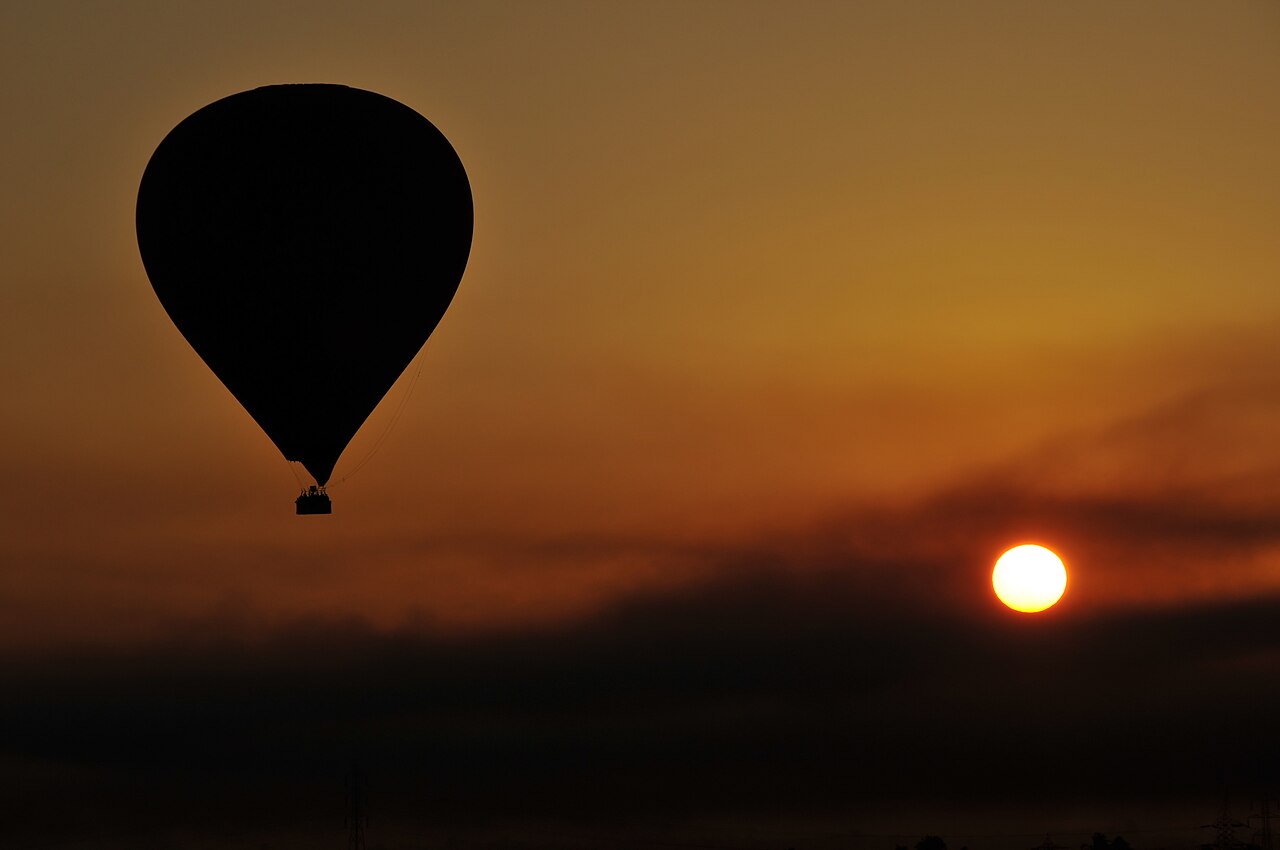
Hot-air balloon over the Theban Necropolis
Aerial experienceLuxor is one of the world's great ballooning spots, and drifting over the West Bank at sunrise is worth the very early alarm. Pickup is in the dark, a short motorboat hop across the Nile, then you watch the burners roar the great envelopes upright before lifting off just as the sun breaks over the eastern desert. For forty-five minutes to an hour you float over a patchwork you cannot see any other way: the terraces of Hatshepsut, the ridges hiding the Valley of the Kings, the ruined mortuary temples, and the sharp line where emerald sugar-cane fields meet bone-dry desert, all with the Nile shining beyond. It is calm and quiet apart from the burner, and genuinely suitable for families and older travellers since you simply stand in the basket. Flights depend entirely on wind and can be cancelled or rescheduled, so book it for your first morning to leave room to try again.
🎯Things to do & experiences — Luxor
The classic way to continue south: a floating hotel sails the ancient river from Luxor to Aswan over three to four nights, stopping at the temples of Edfu and Kom Ombo along the way. You unpack once, wake beside a different monument each morning, and watch timeless riverside life drift past between guided visits. For most first-timers it is the highlight of the whole trip; book the boat and cabin class well in advance.
In the evening Karnak stages a walking sound-and-light show that leads you through the darkened, dramatically lit halls and around the sacred lake while a narration tells the temple's story. Seeing the Hypostyle Hall lit up after dark, with the daytime crowds gone, is genuinely atmospheric. Check the language and start time of each session before you go, as they rotate through the week.
Small, superbly curated and blessedly air-conditioned, the Luxor Museum is the antidote to temple fatigue. Its select collection of statues, including a cache of near-perfect sculptures found buried at Luxor Temple, is displayed with real care and good lighting rather than dusty overcrowding. It opens into the evening, making it a cool, calm stop after a hot day among the ruins.
For a gentle half-day on the water, sail upriver by felucca or motorboat to Banana Island, a small palm-and-banana plantation islet where you can wander the groves and taste the fruit. It is a low-key, relaxing counterpoint to the intensity of the temples, best in the late afternoon; agree the price and duration with the boatman before you set off.
The town's market street, a few blocks back from the corniche, sells spices, scarves, galabeyas and souvenirs, and is liveliest in the cool of the evening. Many visitors arrive by caleche, the horse-drawn carriages that clip along the corniche; agree the fare and route first, and be firm but friendly with sellers, who expect a bit of good-humoured bargaining.
This compact museum on the corniche walks you through exactly how the ancient Egyptians preserved their dead, with real mummies, the tools and materials used, canopic jars and the mummified animals they buried too. It is small enough for an hour but genuinely illuminating, and it makes everything you see in the tombs across the river make far more sense.
🍴Where & what to eat — Luxor
Luxor's cooking is hearty Upper Egyptian: slow-baked tagens (clay-pot stews), charcoal grills, pigeon, and plenty of fresh bread, dips and vegetables, eaten late. Most restaurants cluster in the East Bank town centre and along the corniche, many with rooftop terraces looking onto the temples or the Nile, and the cruise boats feed you generously too.
The signature Upper Egyptian dish: a clay pot of vegetables, chicken, meat or fish baked slowly in a rich tomato sauce and brought bubbling to the table to eat with bread. Comforting and cheap, it turns up on nearly every local menu, and the okra and the seafood versions are both worth seeking out for a proper taste of the region.
A well-loved Egyptian restaurant set in a restored old house, decked out with antiques and coloured glass, serving genuine home-style cooking, mezze, tagens, stuffed pigeon and slow-cooked meats, in a charming, atmospheric setting. It is a favourite introduction to real Egyptian food in Luxor and worth booking; there is a rooftop for cooler evenings.
Upper Egypt does charcoal grilling proud: mixed platters of kofta, chicken and lamb with tahini, salads and baladi bread, and the regional favourite of stuffed pigeon. It is the standard celebratory feast, filling and inexpensive, and you will find it at local grill houses around the town centre and the souk.
For a quick, cheap meal the same Egyptian standards, koshari, ful, ta'meya and fresh juices, are easy to find around the souk and the town centre. They are reliable, filling and friendly to nervous stomachs, and make a good, low-cost fallback between the bigger sit-down meals and cruise buffets.
Half the pleasure in Luxor is the setting, so pick a rooftop or riverside terrace on or near the corniche and let the view of the temples or the Nile do the work. Quality varies, so choose for the outlook and the breeze; sunset over the West Bank from a rooftop is hard to beat.
For a taste of old-world Egypt, the historic Winter Palace hotel on the corniche serves afternoon tea and drinks amid its grand colonial-era rooms and gardens. Even if you are not staying, it is a lovely splurge for the setting and the sense of history; dress a little smartly and enjoy slowing right down.
Plan your trip with Seen